Wednesday, June 17, 2015

Squabbling Over The Scraps

I dashed up to the Cape to see the parents for a weekend - my dad is a pyromaniac.
 We grilled sugarsnap peas and asparagus from the local farmstand, and lobsters.
Back home, the roses began blooming.
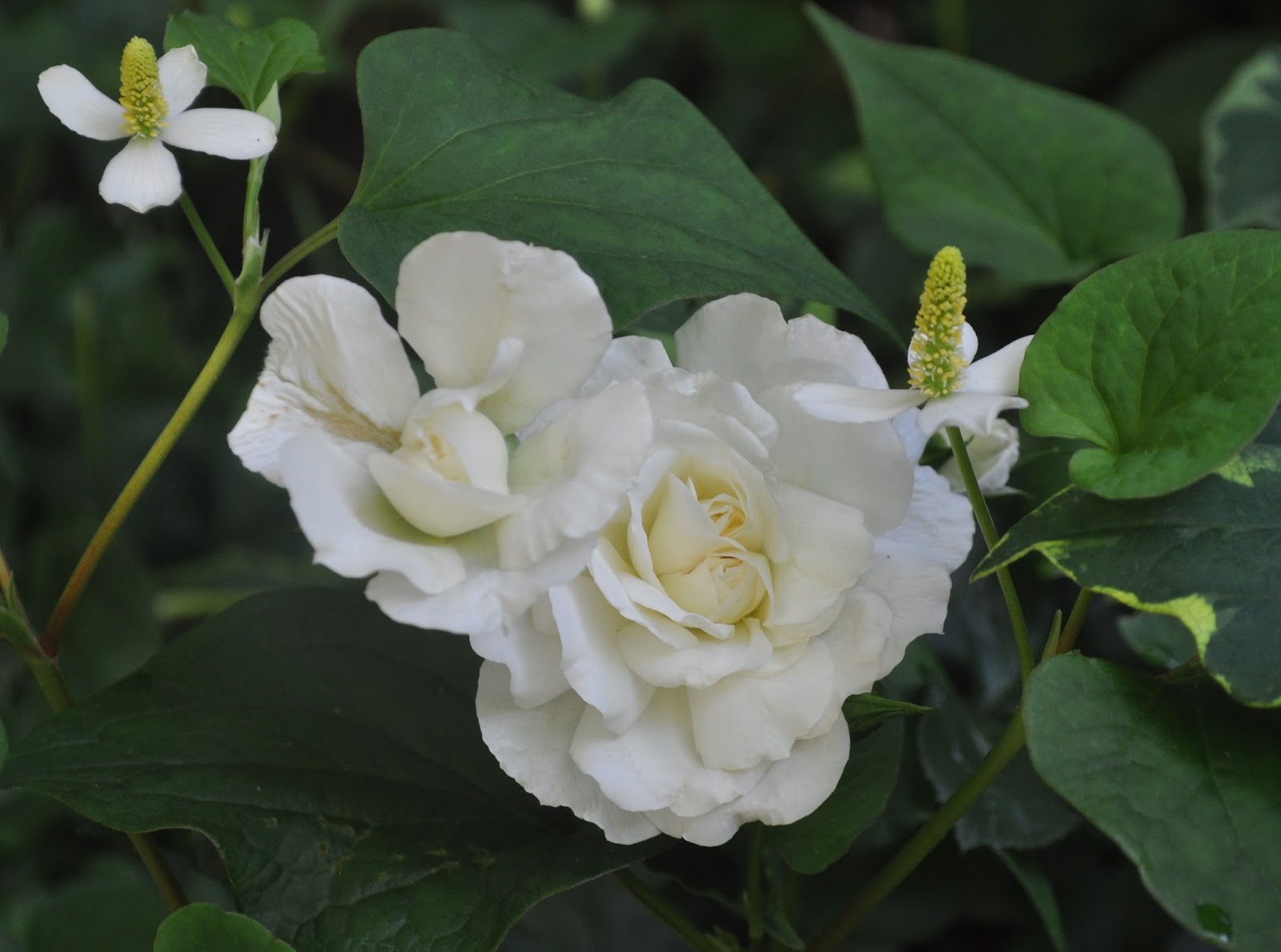
We have had plenty of rain, which seems to leave them spotted.  Sometimes they wilt before they fully bloom.
And I have been busy with Airbnb guests, making breakfasts of omelets or French toast or this one, with lemony crepes.
At the end of this post you can listen to the most recent episode of Extinction Radio, with many excellent reports and interviews.  My fourth Dispatch From the Endocene begins at 1 hour, 35 minutes in.  Following is the transcript:

Welcome to the fourth Dispatch from the Endocene and thank you for tuning in, and thanks to the producers of Extinction Radio.  This episode could be titled, Squabbling Over the Scraps.  The blame game continues.

When people are tempted to point to simple explanations for complex phenomena like societal collapse and species extinction, scientists - and especially those of an ecological bent - often advise exercising caution in assigning causation.  Generally speaking it's never exclusively one trigger, rather there are multiple influences that interact and accelerate the process - although some may be more critical than others.  Like the loss of dozens of species of megafauna, it might primarily be due to hunting, but in some cases, that could have been exacerbated by a change in climate or the spread of a disease, or an invasive species (other than ours), culminating in a wicked converging synergy.

For humanity’s prospects, that is not a reassuring thought at all, because right now there is a confluence of massive, intractable dilemmas that will soon, in my opinion, explode into what I call the great convulsion - with all the sudden, uncontrollable violence implied in that word, convulsion.

We have crucial resources dwindling, climate change, way too many people, over 400 nuclear power plants that will never be decommissioned, all sorts of truly noxious pollution - and throw into that mix the very well known and highly predictable human behavioral response to scarcity and famine - such as war, mayhem, fascism, cannibalism, demagoguery and so forth - and the future doesn't look promising.

Often in the blogosphere you hear doomers or potential doomers wonder, how soon will collapse and chaos affect the developed world?  When, it already has.  We had Katrina, then Sandy, now a permanent drought in the western United States, meanwhile the ocean is close to empty of fish.  The world has millions of refugees, more than ever before in history - victims of water and food shortages, and of extreme weather, and military conflict.  Compared to historical levels we are way past peak oil and peak seafood.  Climate change has passed irreversible tipping points in amplifying feedbacks.  Hello, collapse is here.

Where I live in New Jersey, over the past few years I have been disturbed to note an increasing number of cowbirds.  Cowbirds are originally from the plains of the midwest, and are considered an invasive species in the East, having expanded their territory thanks to - surprise! - deforestation.  They have shiny iridescent black bodies and brownish-purply heads, and make a peculiar and distinctive, sort of liquid burbling sound ending in a screach.  Their reproductive strategy is diabolical and really exceeds polite boundaries of mere resource competition.

They lay their eggs in the nests of other songbirds, over 30 per season.  Cowbird babies hatch earlier and they are larger than the offspring of the nesting mothers.  They commandeer all the food she delivers and as they grow, they crowd out her own hatchlings.  The cowbird mother monitors her eggs and if the nesting mother rejects one, the cowbird can retaliate by ransacking the nest, in what is known as ‘Mafia behavior”.  This threat keeps the songbirds in line, and renders human attempts to remediate the imbalance counterproductive if not futile.  This spring I have watched mother finches leading their cowbird fledgelings, already larger in size than they are, to my feeder, apparently unaware that their own babies are dead and that they are teaching grotesquely large imposters to find food.

So it occurred to me that, if this keeps up, eventually cowbirds will be their own undoing, because after they wipe out all the other birds they be unable to raise their own brood - they don’t know how to build a nest or how to sit on it to keep their eggs warm.  And right after I had that thought, it also occurred to me just why I hate cowbirds so much.

It’s because, they are parasitic, just like us.

In the news I wanted to focus on three recent reports about endangered species, the first is about large herbivores, the next birds in Europe; and lastly, one about plants in New England.  Links to sources will be on the Extinction Radio website.

A number of organizations collaborated to produce a report, titled the European Red List of Birds.  The origins of the joint effort began in 2012, when more than 100 ornithologists and stakeholders from 40 countries met in the Czech Republic.  I’m going to refrain from calculating the extent of their collective emissions of CO2 and other pollutants to travel to the conference.  I’m sure they mean well.

According to their research the top threats to birds in Europe are ‘Biological resource use’, and ‘agriculture and aquaculture’ followed by ‘climate change and severe weather’, ‘pollution’, ‘invasive and other problematic species, genes and diseases’ and ‘natural system modifications’.

Margaret Atwood wrote the introduction, and she concluded - Quote

Perhaps it is time to rewrite John Donne’s famous sermon: No bird is an island, entire of itself; every bird is a piece of nature, a part of the ecosystem; if a single species be extinguished, mankind is the less, as well as if a whole family were, as well as any manner of thy friends were; any bird species’ death diminishes me, because I am involved in the natural world. And therefore never send to know for whom the Red List is compiled; it is compiled for thee. First the birds, then us. Unless we pay attention, we’ll be on the Red List next. Take note.

End Quote.

Sadly, that unabashed anthropocentrism characterized the entire page, where she lists the reasons to be concerned about birds being pushed to and then over the edge of extinction.  Here they are, in order of importance - One. obvious economic value - such as pest control for lumber, for orchards and agriculture; Two. hidden economic value such as replanting forests by distributing nuts and seeds, the better to soak up our CO2 emissions; and Three.  The psychological and emotional value to humans.  She claims that birds are symbols of hope and without them, depression and hopelessness would be costly.

She might be right about all that - 

As Emily Dickenson famously wrote, “Hope is the thing with feathers."

But still,

I am at a loss to know whether this crass monetary assessment of the value of avian life was made out of desperation, to convince people that birds matter to human wellbeing before they all disappear - or perhaps it is cynical but accurate, with its underlying assumption that humans couldn’t care less about preserving a wild species absent some specific economic value to humans.  It’s the same tactic taken lately by Jeremy Jackson in his ocean apocalypse lecture series.  He seems to have given up on people caring about the beauty and magic of coral reefs or fish being massacred by pollution and overfishing, so he now concentrates on the financial and food losses from sea level rise and acidification.

Getting back to the major threat to birds, I wondered, what exactly is “Biological resource use”?  Appallingly, the report states that within ‘biological resource use’, ‘hunting and collecting of terrestrial birds’ represents the largest threat, affecting a total of 42 threatened species. This threat category relates mainly to illegal killing of birds, especially in the case of protected species, such as birds of prey that suffer from persecution.”  

So it is humans directly killing birds that, like the American Passenger Pigeon gone over 100 years ago now, that is the largest reason species are threatened with extinction.   Keep that in mind as we turn to
endangered large herbivores.

Following is an abbreviated version of the Science Daily summary of a study that was published in the online Journal of Science magazine.  An international team of wildlife ecologists conducted a comprehensive analysis of data on the world's largest herbivores, and they warn that many populations of animals such as rhinoceroses, zebras, camels, elephants and tapirs are diminishing or threatened with extinction in grasslands, savannas, deserts and forests.

The lead author said “I expected that habitat change would be the main factor causing the endangerment of large herbivores.  But surprisingly, the results show that the two main factors in herbivore declines are hunting by humans and habitat change. They are twin threats."

The highest numbers of threatened large herbivores live in developing countries, especially Southeast Asia, India and Africa. Only one endangered large herbivore lives in Europe (the European bison), and none are in North America, which, the authors add, has "already lost most of its large mammals through prehistoric hunting and habitat changes.”

I can’t resist adding that by that measure, the LEAST sustainable people in the world were the first prehistoric immigrants to North America, where most of the large animals were extirpated shortly after the arrival of humans over 10,000 years ago.   On other continents many went extinct and many are currently endangered - but at least a few of them were able to persist through the millennia.

The authors note that 25 of the largest wild herbivores now occupy an average of only 19 percent of their historical ranges. Competition from livestock production, which has tripled globally since 1980, has reduced herbivore access to land, forage and water and raised disease transmission risks.

Meanwhile, herbivore hunting occurs for two major purposes, the authors note: meat consumption and the global trade in animal parts.  An estimated 1 billion humans subsist on wild meat, they wrote.

To me that is astonishing, and very frightening, given how rapidly depleted the populations of animals are, and how rapidly that segment of the human population is growing.

The market for medicinal uses, they wrote, can be very strong for some body parts, such as rhino horn.  Horn sells for more by weight than gold, diamonds or cocaine. Africa's western black rhinoceros was declared extinct in 2011.

In that study the authors coin a new term, “the empty landscape" - referring to a terrestrial habitat without large animals.  A depauperate world is horribly tragic to contemplate.  But the trend is likely to be even worse than that, according to the last study I will review, called “State of the Plants”.  According to The New England Wildflower Society, which sponsored the research, so many species of plants have been identified as endangered that they are considered to be canaries in the coal mine, the harbinger of losses to come. 

Despite the calm technical language in the report it would be hard to exaggerate how terrible the contents are, because the species considered at risk are just the beginning, and ultimately the potential for plant extinctions is much greater than those identified so far.

Their report notes that 22 percent of all native plant species in New England are now either extinct, rare, or in a state of decline.  Some have been trampled by incautious hikers, others drowned by man-made dams, still others, strangled by invasive vines.

The report also found that 31 percent of all the region’s plants are not native to New England, while 10 percent of those, or 111 species, are considered invasive.

96 species of native flora have disappeared from New England, though they live elsewhere, and three native plants are now extinct.

I can personally attest that in the countryside where I have lived for 30 years, the brilliantly colorful swathes of wildflowers which adorned the meadows and woodlands and roadsides in a gorgeous abundant parade through spring, summer and fall have all but disappeared.

The loss of plants and the rise of invasive species is part of a worldwide phenomenon. The report cites a global survey by the International Union for the Conservation of Nature that found more than half of 19,000 species examined are considered at risk, noting that nearly 13 million acres of land a year are being developed around the world.

Similar to the paradox I mentioned earlier, of ornithologists flying in airplanes to save birds, I found two particularly bitter passages in this report on plants.

First, hikers who no doubt consider themselves nature lovers are directly killing nature.  Well, that is already obvious from the ridiculous popularity of the oxymoronic “ecotourism” fad - but specifically, the report names the problem of Trampling.  It says, quote “A popular destination for recreationists, alpine and subalpine habitats are threatened by trampling on many peaks and ridgelines. Short growing seasons do not allow delicate alpine plants sufficient time to grow following such disturbance; thus, denuded footpaths can take decades to recover.”

And I might add that is, of course, if they recover at all.

Second, typically, there is barely passing reference to the particular focus of my blog, Wit’s End, which is mostly about the toxicity of air pollution to vegetation and especially trees.  The sole passage reads: “Increasing aerial transport of ozone, plus nitrogen deposition, may exacerbate the stress of climate change. Many alpine plant species are already at the limits of their physiological tolerances and are strongly nutrient-limited in these environments. Changes in nitrogen input may result in altered allocation between roots and shoots and disrupted mutualisms with mycorrhizae, on which many alpine species are heavily dependent.  Acidic precipitation has also been a significant driver of conifer mortality, as it leaches calcium from needles and makes them more susceptible to desiccation.”

They could have added that the “altered allocation between roots and shoots” actually means that root systems shrink, leading to a greater likelihood of landslides especially in these times of excessive rainfall saturation..and they could have added that acidic precipitation on leaves and needles means they are more vulnerable to attacks from insects, disease and fungus, all global epidemics…AND, they could have added that dying vegetation leads to more ferocious wildfires…but, they didn’t.

Lastly, since dams are implicated in plant extinctions, I would like to recommend the movie DamNation, it’s well worth watching.   Before I saw that film, I never appreciated how destructive dams are for very broad distances around river ecosystems - and of course the valleys they flood - or how many of the world’s waterways have been sliced into dead pieces.  There are more than 800,000 dams worldwide, some 40,000 of them are over 49 ft high.  And yet hydropower is often presented as a benign source of so-called clean energy.  There’s a lesson in there somewhere.

Thanks for listening to Dispatch from the Endocene.  I hope you think it’s as much fun as I do!  Please tune in next week when I’ll talk about what is known, and what still remains elusive, about the mysterious and terrifying dieoff of moose, and of bees.


Monday, June 1, 2015

Scorched Earth


Salton Sea, California

All following images are from the book:  
Overdevelopment, Overpopulation, Overshoot (OVER)
because climate is only one symptom of the Endocene
This week I had a discussion via email with Guy McPherson about tropospheric ozone, how it directly harms trees, and why that exacerbates climate change in a reinforcing loop.  After I provided him the substantiation he requested, this led to inclusion on his epic list of amplifying feedbacks.   The damage to forests from ozone is now listed as Number Four under the heading, Climate-Change Summary and Update, a link that is prominently posted at his website, Nature Bats Last.  This is quite an honor for Wit's End, so I am very grateful he took the time to consider the evidence.

Number Four on his list reads:

4. Ozone, a powerful greenhouse gas, also contributes to mortality of trees (Global Change Biology, November 2011). Tree mortality reduces uptake of atmospheric carbon dioxide and instead accelerates the contribution of carbon dioxide into the atmosphere. Forest dieback resulting from atmospheric ozone is the primary topic addressed by Gail Zawacki at Wit’s End.
I looked on this exchange as a great opportunity for me to boil down the hundreds of scientific papers and articles I have read to just a few of the most persuasive, and so I'm going to post them below.


Initially Guy had asked me if I could describe exactly how trees dying from ozone increases global warming; and how warming increases ozone.
I reponded as follows:


Ozone is a potent greenhouse gas in itself.
Ozone is causing massive forest dieback.
Trees are a primary mechanism of CO2 removal - their loss will increase the concentration in the       atmosphere, accelerating warming.
More warming leads to more ozone.
Methane is also an ozone precursor, particularly of the persistent background concentration that is so damaging to vegetation, and more warming leads to more methane release.
I added an excerpt from the abstract of a meta-analysis from 2007, which was cited by the EPA in their (failed) attempt to tighten ozone regulations in order to protect forests, and pointed out that like so much else in the realm of climate research, the effects predicted to happen by "2100" are actually already happening, much faster and are much worse than anyone officially anticipates. 

"Modern day concentrations of ground level ozone pollution are decreasing the growth of trees in the northern and temperate mid-latitudes, as shown in a paper publishing today in Global Change Biology. Tree growth, measured in biomass, is already 7% less than the late 1800s, and this is set to increase to a 17% reduction by the end of the century."

"The study is the first statistical summary of individual experimental measurements of how ozone will damage the productivity of trees, including data from 263 peer-reviewed scientific publications...But more importantly, it has the potential to leave more carbon dioxide, ranked as the first strongest greenhouse gas, in the atmosphere by decreasing carbon assimilation in trees...'"

'This research quantifies the mean response of trees to ozone pollution measured in terms of total tree biomass, and all component parts such as leaf, root and shoot, lost due to ozone pollution,' said Dr. Victoria Wittig, lead author of the study. 'Looking at how ozone pollution affects trees is important because of the indirect impact on carbon dioxide concentrations in the atmosphere which will further enhance global warming, in addition to ozone's already potent direct impact.'"
Guy next asked for links to peer-reviewed journal publications, and the EPA findings, in support of my statements so I sent him the following, slightly edited list:


1.  Link to Wittig's paper quoted above.

Other peer reviewed journal articles:

2.  Global Change Biology:  "Tree mortality in the eastern and central United States: patterns and drivers"

From the abstract:  "We investigated 13 covariates in four categories: climate, air pollutants, topography, and stand characteristics. Overall, we found that tree mortality was most sensitive to stand characteristics and air pollutants."

3.  Science Direct:  "Tropospheric Ozone:  A continuing threat to global forests?  From the abstract:

"Ozone (O3) has a critical role in tropospheric chemistry. It absorbs radiation in the infrared and ultraviolet regions and is very reactive and biologically toxic at appropriate levels of exposure. At the earth's surface, O3 is subject to long-range transport and is the most pervasive air pollutant affecting the world's forests today. The existence of O3 has been known since 1840 and smog-induced foliar injury on plants was first identified in the 1950s. Levels were ∼10–15 ppb during the second half of the 1800s, compared with 30–40 ppb measured as the global background today. By 2100, fully 50% (17 million km2) of world forests are predicted to be exposed to O3 at concentrations >60 ppb. Ozone induces a variety of symptoms and pattern of injury that are dependant upon species, genotype, leaf position on the plant, leaf age, exposure dynamics, and meteorological factors or growth conditions. It is absolutely essential to have knowledge on species sensitivities, O3 profiles and toxicity concentrations for the species under investigation before diagnosis can be confirmed. Ozone is generally detrimental to tree growth and ecosystem productivity, often through induced changes in patterns of carbon allocation or pre-disposition to insects and disease."
4.  Excerpt from "Global Alert", a book by Dr. Jack Fishmann, student and then colleague of Paul Crutzen, and Susan Solomon (you can see his lecture Dec. 2013 "Are We Creating a Toxic Atmosphere?" at the Max Plank Institute here):

"The earth is an enclosed system, with a wonderful proclivity to cleanse itself, but it is being taxed to the limit by the sheer number of humans and their waste products in the form of gases and manufactured chemicals. This is not speculation; it is already happening. These are the signs: In the autumn of 1988 the NYTimes published a story about the Jamaican palm trees in the southeastern United States being decimated by a disease known as yellowleaf fungus. The species may disappear from America by the turn of the century. Although the cause of the disease is a known fungus, the underlying cause is the increased ozone levels in the air, which, by placing the trees under stress, pave the way for the attacking fungus…Forest in parts of Germany are suffering from “early autumn” syndrome: they lose their leaves by late August and early September. The cause? Increased ozone levels in the air…During the sumer of 1988 American farmers lost between $1 billion and $2 billion in crops. The drought was a factor, but a sizable fraction of the losses from lower crop yields can be attributed to increased ozone in the atmosphere."

p. 18  "Increased ozone levels are destroying our forests, diminishing our crops, and adding to the global warming trend."

Posted with more transcribed excerpts here.

5.  From published research by Andrew Bytnerowicz re: the San Bernardino Mountains
"In the 1970s, when the first reliable measurements of Ostarted, peak concentrations could reach 600 ppb (National Academy of Sciences, 1977), and national and state air pollution standards were exceeded during most of the photochemical smog season (http://www.arb.ca.gov/ html/brochure/history/htm). During that time it was also determined that the mysterious ‘‘X’’ disease killing thousands of sensitive ponderosa (Pinus ponderosa) and Jeffrey (Pinus jeffreyi) pines in the SBM in the 1950s was caused by high Oconcentrations in combination with frequent drought stress and severe bark beetle attacks (Miller et al., 1963; Taylor, 1999).This was the first worldwide evidence of a large-scale decline of coniferous forests caused by ambient O3 (Mackenzie and El-Ashry, 1989)."
"In the early 2000s, a widespread dieback of trees in the SBM started to take place due to prolonged drought, over-stocking of forests caused by long-term fire suppression, air pollution, and bark beetle infestation that eventually resulted in a death of 4.6 million trees (Christensen et al., 2007). Such enormous amounts of dead biomass caused a very serious risk to the remaining forests and to the local population. The 2003 fires in the SBM (Keeley et al., 2004) showed that a very high probability of catastrophic fires exists in southern California mountainous forests." 
 
6.  Regarding EPA, research by the USFS indicates that human health standards ("primary") are not enough to protect vegetation, so that stricter, "secondary" regulations should be implemented.
  
"The EPA has concluded that the primary NAAQS based on an hourly average concentration and used to protect human health is inadequate to protect sensitive ecosystems, and has proposed a new secondary standard that is targeted to protect non-urban and non-crop natural vegetation and ecosystems. The EPA has specifically indicated that a strengthened primary standard for ozone will not adequately protect sensitive tree species in higher elevation Western ecosystems where little O3 data are available."

Directly from EPA Secondary Ozone NAAQS Evaluation:

"Exposure to ozone has been associated with a wide array of vegetation and ecosystem effects in the published literature (U.S. EPA, 2006). These effects include those that damage or impair the intended use of the plant or ecosystem. Such effects are considered adverse to the public welfare and can include reduced growth and/or biomass production in sensitive plant species, including forest trees, reduced crop yields, visible foliar injury, reduced plant vigor (e.g., increased susceptibility to harsh weather, disease, insect pest infestation, and competition), species composition shift, and changes in ecosystems and associated ecosystem services.

"Specifically, plants may become more sensitive to other air pollutants, or more susceptible to disease, pest infestation, harsh weather (e.g., drought, frost) and other environmental stresses, which can all produce a loss in plant vigor in ozone-sensitive species that over time may lead to premature plant death. Furthermore, there is evidence that ozone can interfere with the formation of mycorrhiza, essential symbiotic fungi associated with the roots of most terrestrial plants, by reducing the amount of carbon available for transfer from the host to the symbiont (U.S. EPA, 2006)."

"Ozone impacts at the community and ecosystem level vary widely depending upon numerous factors, including concentration and temporal variation of tropospheric ozone, species composition, soil properties and climatic factors (U.S. EPA, 2006). In most instances, responses to chronic or recurrent exposure in forested ecosystems are subtle and not observable for many years. These injuries can cause stand-level forest decline in sensitive ecosystems (U.S. EPA, 2006, McBride et al., 1985; Miller et al., 1982)."
EPA Welfare Risk and Exposure Assessment for Ozone Second External Review Draft Executive Summary:

RISK TO VEGETATION AND ECOSYSTEMS - In this welfare REA, we quantified the impact of O3 exposure on two categories of ecological effects: (1) relative biomass loss for trees and crops, and (2) visible foliar injury...cosystem services most directly affected by biomass loss include: (1) provision of food and fiber (provisioning), (2) carbon storage (regulating), (3) pollution removal (regulating), and (4) habitat provision for wildlife, particularly habitat for threatened or endangered wildlife 

note:  In this welfare REA, we do not quantify insect damage resulting from O3 exposure. In the next Section, Risk to Ecosystem Services, we briefly discuss the ecosystem services associated with insect damage on tree stands and timber production, including the overlap of areas with higher W126 concentrations and risk of bark beetle infestation. 

EPA:  Integrated Science Assessment of Ozone and Related Photochemical Oxidants (Final Report)

Chapter Nine refers to ozone's impact on ecosytems (as opposed to human health)
(citation to Wittig, the first excerpt I sent, is on p. 9-186)
As to how ozone killing trees is an amplifying feedback effect to climate:

1.  More trees means lower temperatures because when moisture evaporates from leaves it cools the air.  Loss of trees leads to higher temperatures.

"Air Pollution Removal and Temperature Reduction by Gainesville's Urban Forest" publication from the University of Florida:

2.  Higher temps also cause leaves to close stomata, meaning they take up significantly less pollution, leaving more in the air, creating more heat (and damage to people and plants):

"It's not just the heat, it's the ozone:  Hidden heat wave dangers exposed" - title of an article in ScienceDaily about a paper called:  "Scorched Earth: how will changes in the strength of the vegetation sink to ozone deposition affect human health and ecosystems?"

Vegetation plays a crucial role in reducing air pollution, but new research by the Stockholm Environment Institute (SEI) at the University of York shows that they may not protect us when we need it most: during extreme heat, when ozone formation from traffic fumes, industrial processes and other sources is at its worst.

The reason, explained lead author Dr Lisa Emberson, is that during heat waves -- when the ground is especially dry -- plants become stressed and shut their stomata (small pores on their leaves) to conserve water. This natural protective mechanism makes them more resilient to extreme heat and high ozone levels, but it also stops them from absorbing ozone and other pollutants.

"...we know that pollutants such as ozone and its precursors can carried around the globe," she says.

The research can also inform public-health responses, Dr Emberson says. For example, people may mistakenly believe that as long as they get out of the city, they are not at risk from poor air quality, so it is important to raise their awareness."

3.  Higher temperatures from climate change lead to even more ozone formation:

From the report by the Union of Concerned Scientists, titled "Rising Temperatures, Worsening Ozone Pollution"

"Given the strong dependence of ozone formation on temperature, a changing climate can make ozone pollution worse. As temperatures increase in a warmer world, days that are conducive to ozone formation are likely to be more frequent...

...What this means is that climate change is likely to complicate the challenge of reducing ozone pollution. Although emissions of ozone-forming pollutants are currently declining, temperature increases associated with climate change are likely to work against this trend. As a result, even to maintain today’s ozone levels may require a greater reduction in precursor emissions. Also, there could be a positive-feedback effect; because increasing temperatures would correspond to greater electricity demand for air conditioning during hot summer months, emissions of ozone-forming pollutants from fossil-fuel power plants would probably increase further."
I didn't add this one, but it's worth mentioning that scientists who have been studying the death of plant species for over a decade in China now believe that the nitrogen emissions in smog - the precursors to ozone - are threatening to "massacre" the world's forests.  An article about their study said the following:

Thick smog could kill off most southern China's natural forests within decades and threatens trees around the world unless nations take action, say scientists.
A 13-year study by Chinese scientists has revealed strong evidence to show the danger is being caused by nitrogen emissions in the atmosphere.
"It is a silent massacre," said Dr Lu Xiankai, associate researcher at Chinese Academy of Sciences' South China Botanical Garden in Guangzhou and a lead scientist of the project.
At one observation point in Dinghu Mountain, Zhaoqing , more than a dozen plant species growing below an old tree had died off until only one or two were left, and the tree could be next to go if the "nitrogen fallout" from smog continued, Lu said.
"Immediate measures must be taken to reduce air pollution, especially nitrogen emissions," Lu said.
"If the situation remains as it is, most forests in southern China will be destroyed within decades. But the impact is not limited in China. The problem will have a ripple effect around the world."
The study, published in this month's Environmental Science and Technologyjournal, run by the American Chemical Society, said the scientists took more than a decade to find solid evidence that smog is killing off trees.
Nitrogen is one of the most important causes for the formation of smog. Many human activities, such as industrial production and vehicle exhaust emissions, pump large quantities of nitrogen into the atmosphere.
Episode 10 of Extinction Radio with my weekly Dispatch from the Endocene is now available for listening!  Thanks to all the hardworking doomers who put the show together.

Tuesday, May 26, 2015

He Refuses To Lie

So many trees have been removed over the past few years, it is easy to forget that they were ever there.  Some standing specters remain, in ominous forboding for more dieoff to come.
 It has been an erratic spring around Wit's End - beautiful but perilously dry.
I am dreading the summer heat and impending, violent thunderstorms.
By sheer happenstance I came across a charming video explication of philosophy as expressed by Albert Camus.  So despite my conviction that it is far past the point of rescuing any portion of an earth habitable for humans, I post this today because Camus' precise brand of existentialism has been of the greatest help to me as I grapple with the despair that arises when contemplating extinction of most, if not all, of the splendid diverse species of life on earth...and the crushing knowledge it is the result of myriad harmful anthropogenic activities.

I find solace in learning more about Camus because for me his ideas ring true not only to what is known in the sciences - from evolution to geology and climate - but his conjectures also fit perfectly with all I have personally learned in my sixty years revolving around the sun.

His observations - such that humans are "irredeemably corrupt and violent" - still leave room for great joy and love, even within the spectre of inevitable death, and the meaningless indifference of the universe to our demise.  His work firmly places puny human concerns into context of the fanatic demands of organized religions (both ancient and modern), and even, more recently, desperate woowoo dogma, with the same craven desires for spirit, divinity, soul and consciousness.  As the narrater in the video says, "Once you properly realize that life is absurd you're on the verge of despair perhaps...but also compelled to live life more intensely".

Calling it redemption might be pushing the notion, but it is better, in my opinion, than blind belief in fantasy salvation.

Plus, I didn't even know he met his mortal end because...car meets tree - How marvelously fitting!  Even if there is no deeper significance to our suffering, there is somehow, a strange synchronous poetry, since it seems we cannot help ourselves from interpreting symbolism where there likely is none.  Well, that's us, isn't it, ha!


Tuesday, April 21, 2015

This Petty Place

To-morrow, and to-morrow, and to-morrow,
Creeps in this petty pace from day to day
To the last syllable of recorded time,
And all our yesterdays have lighted fools
The way to dusty death.  Out, out, brief candle!
Life's but a walking shadow, a poor player
That struts and frets his hour upon the stage
And then is heard no more: it is a tale
Told by an idiot, full of sound and fury,
Signifying nothing.

Handprints in the El Castillo cave in Cantabria, Spain, made 40,000 years ago

Although there is much new in science to add to the saga of tree decline due to air pollution, the convulsing pace of climate disruption - and the convincing evidence that it is too late to do much about it, even if there were a collective willingness to do so, which there isn't - tends to make premature tree mortality less and less relevant.  There are three numbing trends that I find especially overwhelming, because they are threatening in the extreme, and have lately been deemed irreversible.

One, is the melting of Arctic, and the Antarctic and Greenland ice sheets, until recently predicted to be stable for another hundred years or so.  Two, is the related slowdown of the AMOC - the Atlantic meridional overturning circulation - and its likely role in the frigid cold that has yet to completely relent to spring on the US East Coast, where I live...with the prospect that it is going to continue for the foreseeable future...as is Three - the California drought.

Of course I know there are so many other existential threats, all around the world - drought in Brazil, melting glaciers, ocean acidification, climate refugees drowning in the Mediterranean, deforestation, sea level rise, habitat destruction and wild endangered animal poaching, economic collapse, war, and much, much more - but those three are the ones that are closest and most paralyze me with stark dread.

Even so, I feel obligated to record the mounting death toll from falling trees, since nobody else will.  Literally, no insurance company or government agency maintains statistics tracking deaths and injuries from fallen trees.  Why?  Because it almost never used to happen.  I noticed there have been several fatalities recently, and anticipate it will become a noticeable pattern in the not-to-distant future.

High winds are normally fingered as the culprit when trees fall, blocking roads and causing property damage, power outages, and personal injury - even when they obviously have holes in their trunks, a sure indicator of interior and root rot, like this specimen that toppled in Tennessee Sunday night.


In their report, the Weather Channel blamed "straight-line winds" for two fatal tree falls - even though there was no wind.  One article about the incidents described them as "freak accidents":

"Two freak accidents involving falling trees, some 460 miles and hours apart, claimed the lives of two women in Cincinnati and Atlanta over the weekend, officials said."


The greenish grey lichen, a pervasive indicator of decline, is visible in photographs.


In video of a news interview, a witness to the April 19 incident in Bond Hill said the tree should have been cut down.

"Witnesses said the tree uprooted and fell across four lanes of Reading Road. There was no warning the tree was going to fall."

"'I saw when the tree came out the ground. The lady was doing her regular speed limit on the street. You just had an old tree that was there that needed to be cut down. If you look at it you could tell that it was dry-rotted,' witness Mannie Everage said."


The second victim was a 60 year old school teacher, who died when a tree fell on her Atlanta home. Again, there was no storm or wind at the time.


Thunderstorms and wind were blamed for downed trees in Birmington, although the photograph featured in the news story reveals a severely rotted tree.


Another tree featured in the news for this time period, this one in East Point, is also clearly rotted.


Last week, a tree crushed a home in Marietta, trapping two women for hours as firefighters labored to cut them free of debris.  One was airlifted to the hospital.  There didn't seem to be any connection to wind, according to neighbors who listened helplessly to the screams of the victims.


Earlier this month another fatality occurred in Kentucky.

"The severe weather was blamed for the death of 45-year-old Catherine Carlson, who was camping with family at the Natural Bridge State Resort Park in eastern Kentucky early Friday...A massive tree limb hit their tent, killing Carlson and injuring her husband but leaving their three children unscathed. Brian Carlson, 46, was taken to a hospital in critical condition."

Images of fallen trees that are rotted can easily be found in media from many places of our dwindling biosphere, Earth.  This accident occurred in Poland:


 ...and this one in Moscow:


Expect the carnage - and the wildfires - to accelerate until there are no trees left to burn.

Saturday, April 4, 2015

Happy Happy Easter


Props to the publishers of OverDevelopment/OverPopulation/OverShoot for making it available to read online for free.  This vast collection of stunning photographs from around the world constitutes mute testimony sufficient to persuade the most delusionally optimistic fool that humanity has overrun the earth in myriad ways - except of course the authors, who cling to the completely unsupported hope that a change in human consciousness might occur.  The book is presented as a "wake-up call" to save nature from the human flood, and us from ourselves.  However, if you look at the pictures without listening to the noise of the text, it is very plainly an indictment, and an epitaph.

Thursday, March 5, 2015

A Breeze...or a Typhoon?


This video produced by Nick Breeze, which I saw linked at the impeccably produced weekly show, RadioEcoshock, is too well done not to share - for anyone wondering whether the future is still within our control, it is essential viewing.  It is probably the most valuable explanation I have ever seen as to how hopeless the prospects are for preserving a habitable climate, given the unrealistic projections regarding emission reductions and removal.  This would be true even without assumptions that trees will continue to absorb CO2.  My comment, of course was - Trees of all species are dying prematurely right now, all over the world, well in advance of intolerable temperature rise. Nitrogen precursors leading to ozone pollution are invisible - but highly toxic to vegetation. We are losing the forest sink already and this is going to rapidly accelerate the climate change predicted by models, because none of them take pollution into account - with link to my video, The Silent War on Trees).

Blog Archive

My Blog List

Search This Blog

Followers

counter