| The Colbert Report | Mon - Thurs 11:30pm / 10:30c | |||
| Norwegian Muslish Gunman's Islam-Esque Atrocity | ||||
| ||||
Tuesday, July 26, 2011
The Desperation of the Rabid Right


Monday, July 25, 2011

Sunday, July 24, 2011
Dude, Who Stole the Trees?
Over the last couple of stifling, suffocating days, two of my chickens keeled over and died. It was really creepy to dredge the first out of the coop, grabbing her by her feet, stiff with rigor mortis - and the other had been pecked into smitherines by the time I saw it, out in the pen...ugh! Sympathetic neighbors who are better farmers than I told me poultry is overly domesticated and have weak hearts that cannot stand the exertion of extreme heat.

 Even conspiring together the parents could not find enough to feed their ravenous hatchling. I went out on the porch yesterday to check on the family, and they were all gone - not in the nest, not in the cherry tree nearby from where they monitored my trespassing...the only trace (and I'm not making this up to be poetic, it's true) was a tiny white fluffy feather, which I watched in fascinated astonishment and horror as it drifted slowly through the thick air from the nest, wafting from side to side until it settled in silent reproach on the ground at my feet.
 I have also been watching these fawns for the past several days. There is no sign of a mother. I read that when the mothers cannot find enough food for themselves to produce milk, they abandon their babies.
 By surprise I came across something I wrote in December of 2009 that I had since forgotten - Dude, Who Stole the Trees - as a yahoo contribution. Nothing has changed in my assessment since then, except that the timeline has shortened, and by the same token, incredibly, the ludicrous and stupid denial of the Ignorers has expanded and compounded. It's making me quite weary of repeating the same warnings, that we should prepare for hellacious consequences, and the best we could do is recognize that - and commence a radical program of conservation of all fuel and resources. There is so much I could say and link to going on in this crazy dénouement - but why? It's merely repetitive and boring and useless!
Here's a brief, almost silent film clip of the sort of extraordinary extreme weather displacements that have commenced, and will intensify, with no end in sight (you know, just for fun...because, why not? Unspeakably powerful winds make waterfall flow upward!)

These robins made a nest in the meager shade of a nearly leafless apple tree on my patio, and have been frantically trying to raise just one little baby in it - no doubt because the first spring brood was lost.


Here's a brief, almost silent film clip of the sort of extraordinary extreme weather displacements that have commenced, and will intensify, with no end in sight (you know, just for fun...because, why not? Unspeakably powerful winds make waterfall flow upward!)
Thursday, July 21, 2011
What the Climate Scientist Missed - In a New Paper by James Hansen
Jim Hansen is my hero. Besides being the visionary who foresaw the perils of climate change decades ago, he is the only scientist who has had the moral courage to incur condemnation, vilification, and even arrest to warn of the existential threat posed by climate change.
The layman's version of his new paper titled "Earth's Climate History: Implications for Tomorrow" opens with this introduction:
"The past is the key to the future. Contrary to popular belief, climate models are not the principal
basis for assessing human-made climate effects. Our most precise knowledge comes from
Earth's paleoclimate, its ancient climate, and how it responded to past changes of climate
forcings, including atmospheric composition."
That is well and good as far as it goes, but what interests me from the standpoint of one who is concerned about trees dying from air pollution, is a gigantic and critical omission in this approach, for the simple reason that there has NEVER been anything in Earth's history approaching the level of ozone in the troposphere that now exists - and is inexorably rising. When it refers to "past changes of climate forcings, including atmospheric composition", atmospheric composition refers to the level of CO2, and not ozone, because there just wasn't any ozone naturally occurring in the lower atmosphere (with the rare transitory exception of ozone from the stratosphere introduced by lightening strikes). It's a completely untested and dangerous addition created by us in just the past 150 years or so - and there isn't a life form on earth that is suited by evolutionary processes to inhale or absorb its poison.
The rate at which CO2 is accumulating from human activity is unprecedented in past episodes of natural increases, and so that fact alone, as the paper explains, means that the paleoclimate cannot be entirely predictive of how systems will react. But since there is nothing in the past to compare to the human generated emissions of volatile organic compounds from burning fuel, there is also no precedent for trees and other vegetation to be dying en masse in the blink of a geologic eye, or for forests turning from carbon sinks to carbon emitters in a tipping point of such dizzying rapidity that most people are stunned by the vision into blindness.
Of course, even leaving aside the amplifying effect for rising temperatures of dying trees, the paper comes to ominous conclusions based on the insane loss of ice sheet extant and volume...so what difference would it make if people did regain their eyesight and realize that trees are in imminent danger of extinction?
Well, for one thing, like a cancer patient with a terminal prognosis, perhaps we would become sensitive to the ticking clock and do everything possible to wrangle as much time as we could garner. And for another, if it becomes better known that plants - the base of our food chain - are dying out because of air pollution, perhaps the prospect of global famine would be a stronger motivator for drastic conservation, political action, and even a fundamental rethinking of the way society is structured - away from unsustainable growth and towards more just and satisfying and creative cultural priorities.
Nah...just kidding.
The layman's version of his new paper titled "Earth's Climate History: Implications for Tomorrow" opens with this introduction:
"The past is the key to the future. Contrary to popular belief, climate models are not the principal
basis for assessing human-made climate effects. Our most precise knowledge comes from
Earth's paleoclimate, its ancient climate, and how it responded to past changes of climate
forcings, including atmospheric composition."
That is well and good as far as it goes, but what interests me from the standpoint of one who is concerned about trees dying from air pollution, is a gigantic and critical omission in this approach, for the simple reason that there has NEVER been anything in Earth's history approaching the level of ozone in the troposphere that now exists - and is inexorably rising. When it refers to "past changes of climate forcings, including atmospheric composition", atmospheric composition refers to the level of CO2, and not ozone, because there just wasn't any ozone naturally occurring in the lower atmosphere (with the rare transitory exception of ozone from the stratosphere introduced by lightening strikes). It's a completely untested and dangerous addition created by us in just the past 150 years or so - and there isn't a life form on earth that is suited by evolutionary processes to inhale or absorb its poison.
The rate at which CO2 is accumulating from human activity is unprecedented in past episodes of natural increases, and so that fact alone, as the paper explains, means that the paleoclimate cannot be entirely predictive of how systems will react. But since there is nothing in the past to compare to the human generated emissions of volatile organic compounds from burning fuel, there is also no precedent for trees and other vegetation to be dying en masse in the blink of a geologic eye, or for forests turning from carbon sinks to carbon emitters in a tipping point of such dizzying rapidity that most people are stunned by the vision into blindness.
Of course, even leaving aside the amplifying effect for rising temperatures of dying trees, the paper comes to ominous conclusions based on the insane loss of ice sheet extant and volume...so what difference would it make if people did regain their eyesight and realize that trees are in imminent danger of extinction?
Well, for one thing, like a cancer patient with a terminal prognosis, perhaps we would become sensitive to the ticking clock and do everything possible to wrangle as much time as we could garner. And for another, if it becomes better known that plants - the base of our food chain - are dying out because of air pollution, perhaps the prospect of global famine would be a stronger motivator for drastic conservation, political action, and even a fundamental rethinking of the way society is structured - away from unsustainable growth and towards more just and satisfying and creative cultural priorities.
Nah...just kidding.
 |
| Beech Tree |
"Meet the Percapitas"
With his kind permission, it's my great pleasure to post this essay written by Mr. Tim Murray:

Hi there! We're the Percapitas.
We've cut per capita consumption and our per capita waste. We compost, we conserve, we re-use and we recycle. And we're going to teach our three carbon footprints----Mark, David and Robert---to do the same.
Yes, we know that each of us will require more than 38,000 pounds of mined resources each and every year to maintain our cosmetically green American lifestyle, or 2.96 million pounds in our average lifetime of 77.9 years. That's 8,509 lbs. of stone, 5,599 lbs. of sand and gravel, 496 lbs. of cement, 357 lbs. of iron ore, 421 lbs. of salt, 217 lbs. of phosphate rock, 164 lbs. of clay, 65 lbs. of aluminum, 12 lbs. of copper, 11 lbs. of lead, 6 lbs. of zinc, 36 lbs. of soda ash, 5 lbs. of manganese, 332 lbs. of other non-metals for making glass, chemicals, soaps, paper, computers and cell phones, 24 lbs. of other metals for the same uses plus electronics, TV and video equipment and more-----not to mention 951 gallons of petroleum, 6,792 lbs. of coal, 80,905 cubic feet of natural gas and 1/4 lb. of uranium to generate the energy each of us uses in one year.
And we also know that our typical suburban house-----the one with the Prius in the driveway----was constructed with a million pounds of minerals and metals as were 130 million other homes across the country. Ours needed insulation (using silica, feldspar, and trona), roofing (silica sands, limestone and petroleum) and hardware (iron, zinc, copper, steel, brass), as well as windows made from trona, silica sand, limestone and feldspar, and concrete foundations made from sand, gravel and cement, which in turn is made of limestone, bauxite, clay, shale and gypsum and is reinforced by steel rods. And we expect that another 70 million such homes will need to be built by mid-century to accommodate the next 150 million additional people who will make America their home, making us even more vibrant, diverse and strong than we already are now. People are our greatest resource----and besides, our local Sierra Club branch assures us that we can "de-couple" population and economic growth from environmental degradation! We can't wait until they de-couple ice cream consumption from caloric gain and thirst from the desire for fluid.
Now, some doomsayers like analyst Chris Clugston have warned us that 69 metals and minerals vital to our industrial economy have peaked and will soon not be affordably accessible. But we both majored in classic economics at Northwestern and so we know that substitutes will be always be found if the price is right. You can never discount human ingenuity and there is a technological fix for everything. We can have 'green growth'. What we can't have though, is pessimism. We need hope to get us through the night. Cassandras need not apply!
OK, it's true. We could have done better. By not having three kids we could have saved the atmosphere from an extra 28,223 metric tons of C02 each year---or 58 times the amount that we have saved by switching to a fuel efficient car, driving less, recycling, installing CFLs, replacing our inefficient refrigerator and old windows. And by adopting rather than conceiving, we would not have added to the 350,000 children who are born every day to a planet now burdened with 7 billion humans, and braced for more. But we thought that it was vitally necessary that the world have our genes and that our children have the same pair of eyes or ears that we have. And besides, if educated, responsible and morally superior people like us don't have children, then "they" will overwhelm us. So let the breeding war begin!
Oh, and by the way, our procreative choices are NOYB. Pushing other people and other species off the plate is our sacred personal right.
We're the Percapitas. We're green, we're progressive, we read Utne and Mother Jones, we listen to NPR, vote liberal Democrat and we are oh so much more aware and responsible than you are!
(Does anybody have a cream pie handy?)
Tim Murray
July 19/2011
July 19/2011
Monday, July 18, 2011
Chemtrails and Contrails
Predictably, I received a comment to my earlier post, Lurching from Bedlam to Oblivion, from a reader supporting the idea that chemtrails are being sprayed, with a link to a youtube.
I don't want to disparage the many people who are concerned about chemtrails, or give the impression I don't respect their opinions, because I feel a great affinity for anyone (since we are such a tiny minority) who realizes and cares that trees and wildlife are dying out. But I also feel strongly that the chemtrail conspiracy is a distraction, and it's a pity that those people who are convinced by it aren't putting their energy, resources and passion into the fight that really needs to be fought. Following is the comment and my response:
Many people have come forward talking about chemtrails, including retired FBI official Ted Gunderson.
http://www.youtube.com/watch?v=gR6KVYJ73AU
Posted by PLovering
http://www.youtube.com/watch?v=gR6KVYJ73AU
Posted by PLovering
My reply: I watched the video, Plovering, and he does not offer any inside evidence at all, just his opinion.
Let's assume for a minute that government(s) ARE spraying the sky with chemicals or nano-particles or whatever, to reduce warming from greenhouse gases, or to cause human diseases, or kill fish and birds. Leaving aside the WHY?...and the fact that it isn't working very well - HOT! HOT! Russia last year, US midwest this year! Unprecedented record breaking heat waves!...
Sorry - getting back to How - how could a covert operation with airplanes from a few developed nations possibly contribute more than a minute fraction of all the toxic products flowing into the air, compared to what everybody, everywhere is dumping into the atmosphere day and night - using it like an open public sewer through power generation, fossil fuel extraction, biofuel production, transportation, forest destruction, and other enormous industrial processes - all over the globe?
The answer is, even if "they" wanted to, they couldn't possibly produce nearly as much crap as is already being emitted, with no secrets about it - far more than is sufficient to cause horrible diseases, animal extinctions, coral bleaching and dying trees.
So how come all the chemtrail conspiracists aren't organizing and posting videos about cars, trucks, airplanes, coal and nuclear power plants, fracking, deep-water drilling, and the tar-sands - not to mention chemical waste, and artificial fertilizers, pesticides, herbicides and fungicides, and plastic trash killing whales and turtles in the oceans - instead of alleging what would have to be - even if it DID exist - a comparatively speaking miniscule contribution??
Because, it's US, PLovering, it's not THEM.
Sunday, July 17, 2011
Lurching From Bedlam to Oblivion


To them I say, you ain't seen nuthin' yet.

Do you suppose that forests dying - releasing CO2...and subsequently often burning, releasing nitrous oxide (three hundred times more potent as a greenhouse gas!)... could constitute "external nudging"? But don't look to climate modelers to factor that in!
Or consider this research, which demonstrates that removing the top predator from a food chain (as humans have been doing in hunting and fishing since prehistory) has effects that cascade downward, upsetting the delicate balance that evolved and endured for eons before human interference, to the detriment of just about every component plant and animal?

Even more unsettling to me than ice melting insanely fast is the notion that global dimming has been particularly accentuated by the unprecedented surge in air pollution from China just these past few years. While it had already been reasonably well established that warming has been partially masked by pollution that reflects radiation back to space, this newest study reiterates that concept and makes it frighteningly clear that absent aerosol and particulate pollution, the average temperature is likely to heat up incredibly, unbearably quickly. I won't embed it again, but recommend the movie posted on Insidious Soup - and remind anyone who is unfamiliar with what air pollution does to trees to take a look at those in the photo that accompanied the news article:

At any rate, she seemed to have no intention of curtailing even marginally her luxuriously high-consumptive lifestyle, even if that meant leaving her grandchildren to fend with the resulting catastrophes of famine and war - while I by contrast am wracked with guilt and confusion about how to protect future generations, or at least make amends (neither of which is possible, of course). Furthermore, and perhaps most critically, I expect the prognosis to lurch from imminent bedlam to near total oblivion far, far sooner - certainly within my children's lifetime, if not my own. That's because to me it's beyond obvious the trees (and bees, and tigers...) are dying out, right now - and we will rapidly follow them.
With all this weighing upon me I went to Boston Monday night, ostensibly for a lecture by a Harvard Forest ecologist, held at the Arnold Arboretum on Tuesday.


Dr. Orwig will present information that details ongoing tree decline resulting from a variety of stressors including native and exotic pests and pathogens. Conifer species will be highlighted, but ongoing hardwood tree problems will be included as well. An emphasis will be given to identification of the problem, the mode of tree decline, and appropriate treatment options when applicable. Discussion will include pests such as hemlock woolly adelgid, elongate hemlock scale, red pine scale, Sirex wood wasp, spruce diseases, emerald ash borer, Asian long-horned beetle, and oak decline on Martha’s Vineyard.

It's a rare and special treat to spend time with actual live companions (as opposed to my precious, virtual, internet correspondants) who are equally and unabashedly pessimistic about the prospects for survival. (How many people list The Road among their favorite depictions of our looming apocalypse? - although The Book of Eli is right up there for scenery of total annihilation in my opinion). We had dinner together in the icy heaven of a trendy Newbury Street restaurant, and what follows are some residual thoughts from our conversation, loosely reconstructed. (As usual, I apologize for any grammatical mistakes, boring repetitions, and blogger's penchant to mangle fonts and formats!)

The next day I made a solitary pilgrimage to my hometown on Cape Ann, Ipswich, where I was determined to have some of the famous fried clams, and then visit a favorite haunt, Crane's Beach. Since we would be foolish NOT to expect abrupt change, who knows how many opportunities to do so remain?

Here is my delectable pile of fried clams, scallops and onion rings, the most sublime on earth. Their chowder is damn good too. In high summer season, the Clam Box almost always has a line of customers waiting outside the door. On a hot day people can picnic on tables in the parking lot under dense cool shade...oops, surprise!...I didn't need to look any further for a dead tree. The last time I was at the Clam Box was in 2007, and all the trees looked unremarkably intact...meaning in four years that huge hulk in the corner of the wooden deck has gone from just fine to roundly rotted - and those remaining have severely pruned amputated branches.

Roger introduced me to a notion that is gaining currency, which is "acceptable risk" - those losses we as a society are willing to incur to continue releasing greenhouse gases - although to my mind, that is yet another euphemism. Fuel emissions entail pollution well beyond risk in terms of human health, which is more accurately described as assured collateral damage. And then we talked about the intractable obstruction to progress based on scientific fact which is posed by religion.
The very essence of religion is always based on human belief in a higher power - a deity or deities. This is enough all by itself to almost always preclude the concept that humans are capable of destroying our paradisiacal sanctuary on earth - that profusion of natural abundance which the god(s) supposedly created for us, in our superior carnal incarnation of their immortality, to enjoy.
The biggest impediment (even more than the selfishness, greed and genetically determined shortsightedness usually blamed by perplexed psychologists) to convincing people that the entire life-sustaining ecosystem is endangered by human activity is the nearly universal faith in omnipotent god(s) that is brainwashed into most children in virtually every tribe or town from an early age.
People indoctrinated in a conviction that some higher power is the guardian of nature are not likely to assume responsibility for permanently and irretrievably despoiling it. But that unpalatable contention - along with overpopulation and our relentless and irreversible march towards ecocide - is another thorny concept that climate and environmental activists prefer to pussy-foot around.
The biggest impediment (even more than the selfishness, greed and genetically determined shortsightedness usually blamed by perplexed psychologists) to convincing people that the entire life-sustaining ecosystem is endangered by human activity is the nearly universal faith in omnipotent god(s) that is brainwashed into most children in virtually every tribe or town from an early age.
People indoctrinated in a conviction that some higher power is the guardian of nature are not likely to assume responsibility for permanently and irretrievably despoiling it. But that unpalatable contention - along with overpopulation and our relentless and irreversible march towards ecocide - is another thorny concept that climate and environmental activists prefer to pussy-foot around.

Ipswich has more intact 17th century houses than any town in the US (thanks to long-standing poverty which precluded "development") - and as you would expect, there are many very old, enormous trees lining the narrow streets. Like this one, bare branches protrude outside the leafy zone, a sure symptom of interior damage. That's about the best that can be found - others are in far worse condition. These examples are just a few from the drive back into town from the Clam Box.

I have been following a long email thread primarily concerned with different aspects regarding over-population, and one of the participants reminded us that many ideologues are persuaded by this passage, which bears repeating:

If you want another route into the minds of intractable deniers, check out SmashTheWatermelons - for a laugh, because why not? While I was rummaging in my suitcase, I found buried in a pocket a promotional green pen with a red cap, embossed with that address. It was a leftover souvenir from the Heartland Institute SICCC, where there seemed to be general agreement that environmentalists and climate change activists are "green on the outside but red on the inside" - subversive communists in disguise - and all their protestations about clean water and air, methane clathrates and melting permafrost, are merely a front for their political ambitions. In the context of the deniers' transparently anti-regulatory, pro-industry profit-driven agenda, it is quite the trip through the looking glass.

Susan and I exchanged dismal gardening notes, both of us having noticed that the usual volunteer blossoms of cleome or cosmos never reseeded this spring. Usually they are as prolific as weeds around Wit's End. What has this to do with a story that wildflowers are disappearing? Well, I'd say that some of it can be blamed on climate change, some of it on ozone inhibiting the lifespan of pollen and the yield and viability of seeds; then again, perhaps the disappearance of butterflies is, like bees and bats, a warning that pollinators aren't able to fulfill their designated role.

On a whim while heading to the beach I detoured past the house where I grew up, which my parents sold over ten years ago. The new owner was puttering around the porch and invited me in. He has kept it up meticulously, and added an historical marker.

He was very kind to let me roam around the property, down to the dock at the brackish river, which was at low tide.

I spent countless halcyon hours in the summertime, winding through channels in the salt marsh to fish in the tranquil bay with my dad, my sisters and later, my daughters when they were little. These are views are from the mooring - across the water, looking upstream and down.

People everywhere are gradually noticing that trees are dying - and are reaching for reasons. So in addition to the usual roster of insects, disease and fungus, you can find blame apportioned to natural gas leaks, road salt, local power plants, precipitation swings from climate change, chemtrails, and the corexit used as dispersant in the Gulf oil spill. It's virtually impossible to convince anyone that the problem is much more widespread than such localized sources, because people simply do not want to comprehend that our profligate use of fuel and comfortable modern lifestyle is the primary, underlying cause. The unavoidable conclusion is that we would have to make enormous sacrifices to ameliorate the outcome, and hardly anybody wants to even think, let alone recommend, fundamental cultural paradigm shifts as a solution.

The New York Times had one of several versions of the allegation that a new herbicide sold by DuPont this year is killing trees. This could be a case where it is possible that the herbicide (though I've no fondness for them of course) is being blamed for trees that were dying BEFORE the herbicide was used. Plus - as I post on this blog week in and week out - innumerable trees are dying that are no where near applications - in different states and countries and continents. It will be interesting to see how this plays out eventually, because there is quite a bit of money involved, with losses on the part of homeowners, landscapers, and insurance companies, plus potential liability for DuPont.

Because I write about the trees, I still hear not infrequently from readers about chemtrails, even though I invariably disappoint them because I tend to think the whole thing is nonsense. First, it would have to be such a HUGE number of individuals involved - many performing tangential and poorly paid labor - which would require them all to be lying their heads off...and not ONE has come forward, ever, even as an anonymous whistle-blower. And second, even given how evil our corporate masters are, why would they drop poison out of the sky that will contaminate the lungs and skin of their own children. When the offspring of the corporate and military masters supposedly orchestrating this geoengineering attack are walking around wearing gas masks and hazmat suits (instead of Gucci sunglasses, Prada shoes and Chanel perfume) I'll believe they are engaged in deliberate chemtrail spraying.
Secondly, Occam's razor is applicable. We don't need a government conspiracy to explain dying trees, stunted ornamentals and reduced crop production. All we need to do is look in the mirror. Unless you're living in a tent, never go anywhere and grow your own food, you must be spilling toxic gases into the atmosphere every time you turn on a light or open the tap or travel to work or shop. Those identical toxic gases are proven from decades of scientific research (check the links of publications in the Basic Premise page, at the top of the blog!) to adversely affect the growth of plants (and human health). The amazing thing would be if trees weren't dying, frankly.
A flurry of panic ensued after the oil spill in the Gulf. There were dozens of you-tubes of speckled tomato leaves and discussion boards about how corexit was damaging backyard vegetable gardens, even in the Western US and Europe! I told them all the same thing - you don't need to blame one oil spill for something that was happening before the spill, and was occurring in places far beyond the range of impact. I don't think I convinced a single one, for the same very simple reason you can't talk people out of the chemtrail theory:
Once people realize trees are dying (and that observation becomes reinforced constantly once the unmistakeable symptoms are recognized) most of the illuminated are far more comfortable blaming a malevolent government cabal or a negligent oil company for environmental damage than their own actions and way of life.

To get to the beach, I had to pass the 1638 Whipple House, which has long been a museum. I used to volunteer as a guide, and developed an abiding love for the artifacts of a past when life seemed to be fulfilling and rich, even though (or perhaps because) it was lacking machinery. Ipswich had a thriving hand-made lace industry, and there are pillows, paper patterns, pins, bobbins and thread displayed inside.

Scattered through the crown of this tree are yellowing leaves.

The 1795 Heard House, directly across the street, is another museum, a repository of splendid treasures from the original owner's trade with China. Back when I worked there it was way before the day that antiques were preserved in controlled humidity, and much of the collection was stored helter skelter in cupboards and drawers. When there was a break between tourists, we guides were allowed to try on fancy embroidered ballgowns, fans, gloves, hats and shoes from two centuries ago, articles that were casually stuffed in closets and the attics...much to our delight!


The copper beech is barely a remnant of its former glory.

Even shrubs, exposed like trees to season after season of poisonous gases, accumulate physiological damage internally that becomes visibly noticeable only after little hope for recovery remains.


"Forestry investigators have also revealed they have discovered what caused the huge blaze, saying it was triggered by an aspen tree falling on to power lines in the Santa Fe National Forest some 12 miles from Los Alamos.
The tree caught fire, then the flames spread throughout the surrounding vegetation, spurred on by bone-dry conditions and strong winds."


Just for the record, here's a youtube about the pecan orchards in Texas, which began deteriorating long before the current drought. I tried in vain to interest the growers and their attorneys in the identical trend in trees not in close downwind proximity to coal stacks, but they are determined to sue a local power plant.

I left the trees in town with relief, looking forward to Crane's beach, which is a uniquely pristine part of an enormous wooded estate, long since entrusted to a trust for public use. The cottage at the entrance is now a small, romantic Inn.

On the ascent up the long, circuitous drive that wends up to the summit where the Castle is perched, I passed not one but two wild turkeys! I have seen them there before - perhaps because there is no hunting they are bolder than you might predict.

On the thread about over-population I mentioned previously (which probably will not be the decisive end of homos sapiens sapiens because at the rate we are reproducing, nature will take care of our excess before we do) it was interesting to see passages quoted from Norman Borlaug that corroborate what I was told last summer by a Rutgers professor - that the Nobel recipient regretted his role as the father of the "green revolution". (There's a funny phone exchange recounted in a post about my letter to our NJ Governor, Chris Christie.)

Included was the ending of his speech in 1970, when he was awarded the Peace Prize:
Most people still fail to comprehend the magnitude and menace of the "Population Monster". In the beginning there were but two, Adam and Eve. When they appeared on this earth is still questionable. By the time of Christ, world population had probably reached 250 million. But between then and now, population has grown to 3.5 billion. Growth has been especially fast since the advent of modern medicine. If it continues to increase at the estimated present rate of two percent a year, the world population will reach 6.5 billion by the year 2000. Currently, with each second, or tick of the clock, about 2.2 additional people are added to the world population. The rhythm of increase will accelerate to 2.7, 3.3, and 4.0 for each tick of the clock by 1980, 1990, and 2000, respectively, unless man becomes more realistic and preoccupied about this impending doom. The ticktock of the clock will continually grow louder and more menacing each decade. Where will it all end?Malthus signaled the danger a century and a half ago. But he emphasized principally the danger that population would increase faster than food supplies. In his time he could not foresee the tremendous increase in man's food production potential. Nor could he have foreseen the disturbing and destructive physical and mental consequences of the grotesque concentration of human beings into the poisoned and clangorous environment of pathologically hypertrophied megalopoles. Can human beings endure the strain? Abnormal stresses and strains tend to accentuate man's animal instincts and provoke irrational and socially disruptive behavior among the less stable individuals in the maddening crowd.We must recognize the fact that adequate food is only the first requisite for life. For a decent and humane life we must also provide an opportunity for good education, remunerative employment, comfortable housing, good clothing, and effective and compassionate medical care. Unless we can do this, man may degenerate sooner from environmental diseases than from hunger."

Already at the top of the hill it was evident that the trees on Castle Hill are not immune to the same die-off afflicting lower elevations.

When I was growing up, before the property had been rehabilitated and access restricted, I liked to ride my bike there and prowl around, easily eluding the one caretaker who patrolled the huge preserve. Back then the entire treeline was so high you wouldn't have even known the ocean lay far beyond...and now, but for the odd remaining tree jutting above, it has been greatly reduced, and no longer masks the horizon.

The conifers are turning a lurid purply brown and losing needles and branches.

This was a modest, summer vacation retreat for the Crane family.

According to our guide during a tour of the interior, terrific winter storms are becoming more virulent every passing year, and last March winds knocked down - literally - hundreds of trees.


A $2million project is replanting the rolling slopes of the grand allée, where a narrow glimpse of the sea was once the only vantage through which it could be seen beyond the woods. A symmetrical row of classical statues promenades on either side, while beneath the balustrade that traverses the lawn is the site of what was once an elegant salt-water pool, with colonnaded, mirrored dressing rooms on either side.

Originally the grounds were meticulously landscaped and full of high-maintenance formal gardens, a bowling green and delightful maze of boxwood hedge.

This path leads down to the ruins of an outdoor amphitheater and another crumbling folly beyond its gated arena.

The leaves of the perennial flowers and groundcovers exhibit scarring from injured stomates.

It is so sad to see such decimation that I question, if we are pre-ordained to self-destruct through ecocide, like the proverbial gluttonous bacteria in a petri dish, why bother to document it? And yet, what frustrates me is I think if we hadn't been so stupid, so swayed decades ago by the myriad smorgasbord of earthly delights there for easy plucking, we might have pulled it off.

Instead we chose Reagan's false promise, "mourning in America", the Republican siren call of drill baby drill, borrow and spend. (When I finally finish this post I promised myself, I'm going to find a quiet shaded spot outside and read Naomi Oreskes' "Merchants of Doubt", the chronicle of deception practiced by the same scientists who prostituted everything from the despicable Star Wars program to denial of harm - from tobacco to acid rain to the ozone hole, to global warming). We could have listened to Jimmy Carter's admonishments, presented on April 18, 1977 when, during a televised speech he outlined ten principles (and they are highlighted in between pictures of the garden ruins and the trees dying around them). It made perfect sense to me when I first heard it, and now it is so poignantly prescient and long since superseded by America's blind stupidity, it just makes me want to weep.

The first principle is that we can have an effective and comprehensive energy policy only if the government takes responsibility for it and if the people understand the seriousness of the challenge and are willing to make sacrifices.
The second principle is that healthy economic growth must continue. Only by saving energy can we maintain our standard of living and keep our people at work. An effective conservation program will create hundreds of thousands of new jobs.


The third principle is that we must protect the environment. Our energy problems have the same cause as our environmental problems -- wasteful use of resources. Conservation helps us solve both at once.
The fourth principle is that we must reduce our vulnerability to potentially devastating embargoes. We can protect ourselves from uncertain supplies by reducing our demand for oil, making the most of our abundant resources such as coal, and developing a strategic petroleum reserve.


The fifth principle is that we must be fair. Our solutions must ask equal sacrifices from every region, every class of people, every interest group. Industry will have to do its part to conserve, just as the consumers will. The energy producers deserve fair treatment, but we will not let the oil companies profiteer.
The sixth principle, and the cornerstone of our policy, is to reduce the demand through conservation. Our emphasis on conservation is a clear difference between this plan and others which merely encouraged crash production efforts. Conservation is the quickest, cheapest, most practical source of energy. Conservation is the only way we can buy a barrel of oil for a few dollars. It costs about $13 to waste it.


The seventh principle is that prices should generally reflect the true replacement costs of energy. We are only cheating ourselves if we make energy artificially cheap and use more than we can really afford.
The eighth principle is that government policies must be predictable and certain. Both consumers and producers need policies they can count on so they can plan ahead. This is one reason I am working with the Congress to create a new Department of Energy, to replace more than 50 different agencies that now have some control over energy.


The ninth principle is that we must conserve the fuels that are scarcest and make the most of those that are more plentiful. We can't continue to use oil and gas for 75 percent of our consumption when they make up seven percent of our domestic reserves. We need to shift to plentiful coal while taking care to protect the environment, and to apply stricter safety standards to nuclear energy.
The tenth principle is that we must start now to develop the new, unconventional sources of energy we will rely on in the next century.

Here's what he warned of:
We will feel mounting pressure to plunder the environment. We will have a crash program to build more nuclear plants, strip-mine and burn more coal, and drill more offshore wells than we will need if we begin to conserve now. Inflation will soar, production will go down, people will lose their jobs. Intense competition will build up among nations and among the different regions within our own country.


If we fail to act soon, we will face an economic, social and political crisis that will threaten our free institutions.
But we still have another choice. We can begin to prepare right now. We can decide to act while there is time.

Of course, they did have wicked winds in the March storm, but that cannot be why these two new replacements are doing so poorly.

As I approached the beach the dead trees in the salt marsh and the dunes fade into the background, but they outnumber the living.

Once I returned home to New Jersey, the heat broke and we have had a few enchanting days of what I remember summer used to be - warm, sunny, breezy and balmy...with evenings when the air flowing through the screened window is so cool that a light cover is required to sleep at night.

Meanwhile, the south and midwest of our country are gasping in dry searing temperatures without respite.

We are dodging bullets and meanwhile there is no clear direction as to the most moral - or effective - course to take. According to some models of global dimming, the drought in Africa could be a repercussion of wind currents and precipitation altered by the pollution from developed nations. It is only dumb luck that it has hit the hapless victims least responsible...but the southern US is not far behind. Why are people so apathetic, so in denial?

The castle would be far to the left in this northerly view, with the contour of the allée, obscured by trees, coming to an end at the precipice of Steep Hill. Zooming in, blurry brown patches mar the green cover.

I read an analysis that deconstructs the "14 propaganda Techniques" FOX uses to brainwash Americans, but I suspect it goes far beyond one filthy station. The assumption of a free and open press is just one more weapon that has been co-opted by the incipient corporatism which is rapidly coming to dominate the political system - globally, not just in America. The manipulators have cleverly, using the best brains graduated from an Ivy League education indoctrination, figured out how to greenwash everything from GMO food to counterculture music.
It is essential to understand that the main stream media is a wholly owned subsidiary of corporations - and the only purpose for it is to provide distraction from reality, and lull the captive audience into accepting illegal wars, widening gaps in wealth, government corruption, and poisoned food, water and air. Period. There is no news, there are only lies...and lies by omission.
The "other" media - the blogs, the websites of a fragmented and ineffectual opposition - unwittingly serve our corporate masters as well...so far.
The reason our corporate overlords allow the bloggers (like me) to foment is that so far we are only a pesky opponent that they secretly view as beneficial to them. Blathering on the internet and obscure, unimportant alternative magazines has kept us from actually doing anything. We think we are accomplishing something but we are accomplishing nothing. It's ridiculous how many blogs and youtube videos there that are anti-corporate, that warn of over-consumption and resource depletion, of dangerous extremes from climate change, and the plundering by the ultra-wealthy...or, like Wit's End, ecosystem collapse.

How many different organizations, conservation groups, and government agencies exist to protect the environment, save endangered species, and promote clean energy? I bet there are hundreds at least, maybe tens of thousands. All frustrated authors and activists who in the day of the Bastille would have to have physically gone out into the street to communicate with each other - let alone the unenlightened. Now we make a donation, and exchange electronic pulses...and are invisible except to each other.
Well! I for one am grateful for the opportunity has arisen to fulfill my New Year's Resolution, which is to get arrested. I prefer to do it with a group demonstration where it is organized and predictable and hopefully safe, so even though it isn't specifically a protest about trees dying - and is restricted in terms of individual protests - I signed up for the August/September Tar Sands Action, which is designed to demand that Obama not approve a pipeline from Canada across the midsection of the US.
It will be a pity to fulfill the pledge to be dignified and wear business clothes (grrr). But, it's sponsored by Jim Hansen, Naomi Klein, and David Suzuki among others whom I respect unreservedly, so I promise to NOT dress up like a cupcake, either. Roger says one of their appeals is for old people like me, who should be more willing to have an arrest on their record than young people concerned about their future job prospects (not that it will matter, but okay, let them imagine it will)...
Of course I DO think this "Black Swan" ballet protest against BP's investment in the tar sands, which took place in Trafalgar Square just prior to their corporate-sponsored Royal Opera House "Summer Screens" performance, looks like a lot more fun.

One of the dancers depicted a white swan being smeared by oil, and she described their purpose as follows: “Most people have never heard of tar sands, and BP would be happy to keep it that way. We used classical dance – an unusual campaigning medium – to introduce the issue to a new audience. The performance was meant to be enjoyed, but also to shock, with a visible struggle between a vulnerable creature and a powerful oil giant." and the article said:
"Canadian tar sands are the world’s largest and dirtiest industrial project: exacerbating global warming through deforestation and greenhouse gas emissions, causing rare forms of cancer amongst First Nations communities, destroying vast tracts of forest habitat and threatening wildlife to extinction."

They quoted James Hansen, who wrote of the tar sands, America's number one source of oil:
"The tar sands of Canada constitute one of our planet's greatest threats."
This photo is from a coordinated and stealthy fresh air flash mob called "Climate Rush", also in London, where bicyclists and pedestrians staged a "die-in" to dramatise the public health emergency that is a consequence of breathing air pollution from motorized transport.

Unfortunately I guess this participant wouldn't qualify as dignified enough for the protest in Washington:

Oh well, there will be another intriguing venue for protest here in the US - although again it is not specifically related to climate or trees - but is inextricably intertwined to garner my endorsement. Here's the official call from Adbusters:
On September 17, we want to see 20,000 people flood into lower Manhattan, set up tents, kitchens, peaceful barricades and occupy Wall Street for a few months. Once there, we shall incessantly repeat one simple demand in a plurality of voices.
DEMOCRACY NOT CORPORATOCRACY

Thus I may be camping out in Manhattan - depending on how much violence appears possible.

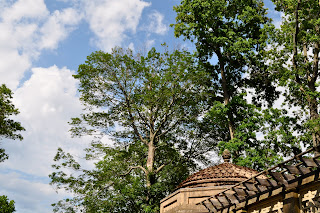
These days it is safer to contemplate nature either from a great blurry distance, or in very closely cropped detail, precluding any assessment of the overall trajectory.
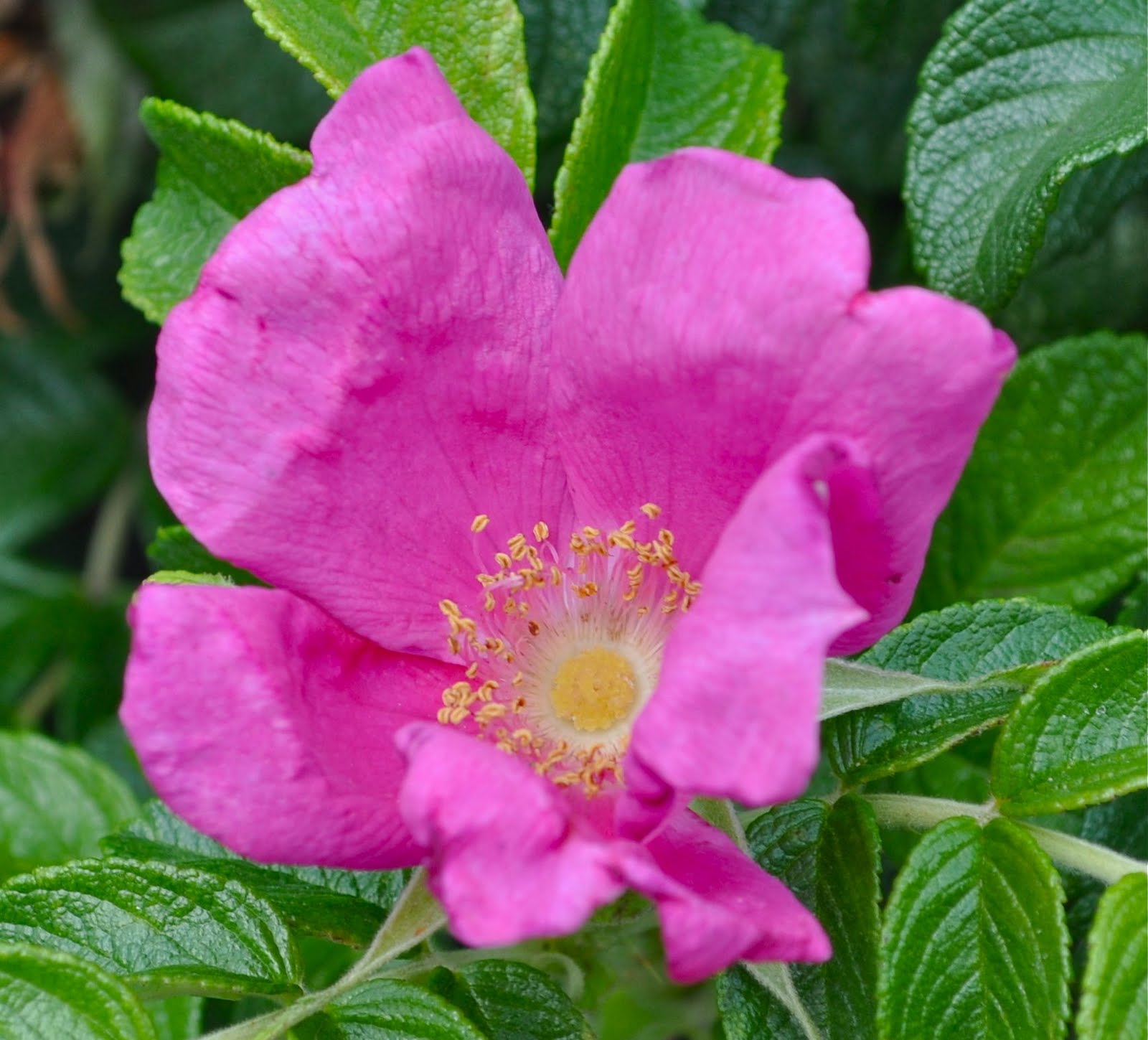
A poem, found at this odd and wonderful blog, describes with sweetly succinct brevity the state of breathless paralysis that marks my fascination with our ponderous train, trundling implacably on its way to the site of total wreckage:
Part of Eve's Discussion
It was like the moment when a bird decides not to eat from your hand,
and flies, just before it flies, the moment the rivers seem to still
and stop because a storm is coming, but there is no storm, as when
a hundred starlings lift and bank together before they wheel and drop,
very much like the moment, driving on bad ice, when it occurs to you
your car could spin, just before it slowly begins to spin, like
the moment just before you forgot what it was you were about to say,
it was like that, and after that, it was still like that, only
all the time.
and flies, just before it flies, the moment the rivers seem to still
and stop because a storm is coming, but there is no storm, as when
a hundred starlings lift and bank together before they wheel and drop,
very much like the moment, driving on bad ice, when it occurs to you
your car could spin, just before it slowly begins to spin, like
the moment just before you forgot what it was you were about to say,
it was like that, and after that, it was still like that, only
all the time.
- by Marie Howe from The Good Thief
Subscribe to:
Posts (Atom)
My Blog List
-
-
-
-
-
-
-
The Vineyards of Vostok10 years ago
-
-
-
Make US Great Again8 years ago
-
-
May Flowers4 months ago
-
Apex Predator Irony3 years ago
-
Our motto.7 years ago
-
-
-
-
-
Here’s Your Proof9 years ago
-
Signs Posted In December 20257 months ago
-
Stunning recovery of Arctic Sea Ice13 years ago
-
-
-
-
-
-
Moderate PM 2.5 along West Coast7 years ago
-
-
-


