On the 29th of last October I walked up to the village to survey the damage from the Sandy storm. Massive trees had fallen, exposing their centers, rotted from pollution.


The owner of this house replaced the dead tree in the spring, a younger version which began turning fall colors even before August. No doubt the person who planted this new tree has no idea that unless we stop poisoning the air with emissions from fossil fuels it too will be condemned to die prematurely.


I left on the 15th for Mt. Shasta to attend a presentation of Mike Sosesbee's movie, and be part of the filming for a new documentary he is working on, about collapse:

Since then internet access has been intermittent and I've been busy meeting so many people that, needless to say, Wit's End has been neglected.

On my travels I came across this oddity in Nevada.

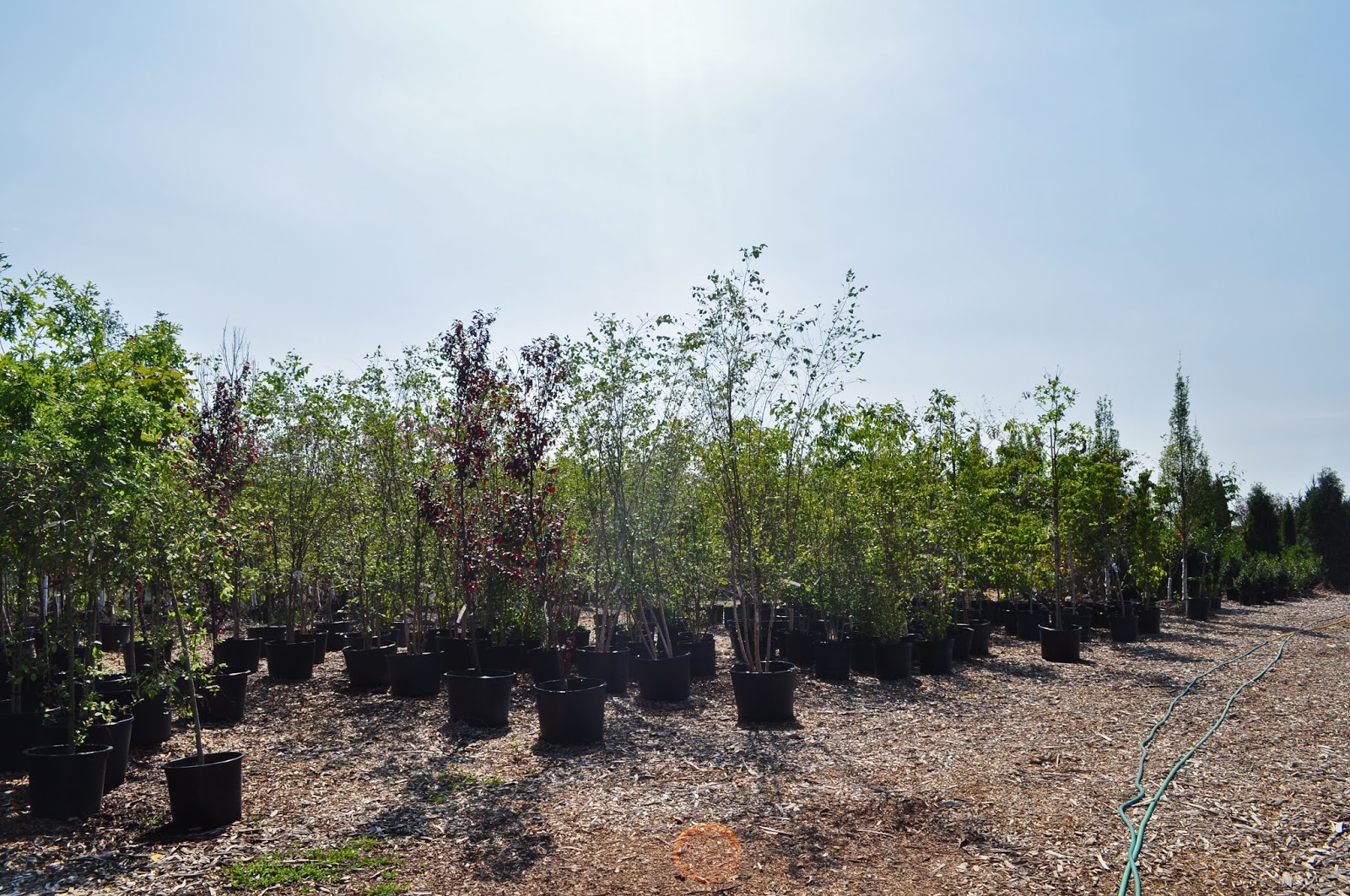
Before I even get to all the adventures here, I visited two nurseries back home before I left. With all the blaming of drought for tree decline, it's critical to understand that trees are dying even when they are being watered, as they are in both of the nurseries, where the leaves are just as injured as they are on trees out in the landscape.

A new research paper presents information about the impact of ozone on human health, which is relevant in two ways - first, vegetation is more vulnerable to pollution than people, with a lower threshold (40ppb) at which damage occurs...and second, the research documents the continuing rise in concentration around the world:
Global premature mortality due to anthropogenic outdoor air pollution and the contribution of past climate change
"We estimate that in the present-day, anthropogenic changes to air pollutant concentrations since the preindustrial are associated annually with 470,000 (95% CI, 140,000 to 900,000) premature respiratory deaths related to ozone."
 |
Figure 3. Current premature mortality due to anthropogenic air pollution (2000–1850), in deaths yr−1 (1000 km2)−1, for the multi-model mean in each grid cell, for (top) ozone (respiratory mortality) for 14 models
|
In the EPA's final draft for their exhaustive Integrated Science Assessment of Ozone and Related Photochemical Oxidants, they declare (p. 9-117) their first "key conclusion" is that:
"Ozone effects in plants are cumulative".
Cumulative damage is why the most glaringly sickly tree in the nursery is the oldest one, which is the pine planted in the earth at the center. It's why the truly big trees are dying out, and they aren't being replaced. It's why the center of the pine is devoid of needles.

On p. 9-147, the EPA condenses countless research projects, chemical analysis, and graphs into a brief paragraph which, if fully comprehended, should inspire stark terror:

9.7 Summary and Conclusions
"Based on the evidence presented in Chapter 9 and summarized here, O3 is causally related or likely to be causally related to effects observed on vegetation and ecosystems. The evidence for these effects spans the entire continuum of biological organization, from the cellular and subcellular level to the whole plant, and up to ecosystem-level processes, and includes evidence for effects at lower levels of organization, leading to effects at higher levels."

Short of screaming, "the ecosystem is collapsing", the EPA really couldn't make it more clear.
 From individual plants to ecosystems, ozone is CAUSING effects which span the entire continuum of biological organization.
 And yet only a few are paying attention to an existentialand urgent threat that is staring us in the face. One who has been is the blogger at i got somethin' to say, who forwarded this story:


Trees dying in Southwest Michigan after last year's drought added 1 stress too many


KALAMAZOO, MI -- Trees in Southwest Michigan, and around the state, have been laid low by a combination of forces that include weather, management practices, age and a deadly combination new fungus diseases.


Among the hardest hit is the backbone of Michigan landscaping -- the stately Colorado blue spruce.


Pat Glass of Kalamazoo has had seven of her 14 spruce trees hit by the condition, that starts with dying limbs and dropping needles. Then she began noticing she was not alone.


"I saw sick and dying trees along our interstates, the interstate exits, people's yards, around public buildings, down our city streets -- almost everywhere I looked," Glass said. " It was awful and scary and sad."


Trees are having a rough go of it, confirmed Michigan State University plant pathologist Dennis Fulbright, a researcher who is studying the problem that has hammered the spruce trees.


"At this point, we're just trying to find out if there's anything that will stop it," Fulbright said of the combination of diseases termed "spruce decline" that is killing Colorado blue spruce trees from the bottom up.


Older trees have slowed their growth, making them especially vulnerable to the barrage of fungus diseases, helped along by recent wet springs, he said.


Fulbright and a team of MSU scientists were awarded a $21,000 grant in 2011 to begin studying the problem.

Since then, they have established research plots at Hickory Corners and are testing the effectiveness of various fungicides, both on ornamental trees and the spruce trees grown for sale as Christmas trees.
 In addition, researchers are looking at those individual trees that have resisted disease to learn more about how they are genetically distinct from those that have gotten sick, and to perhaps develop resistant strains.


Ben Yost, owner and general manager of Landscape Arborist Services in Kalamazoo, the company helping Glass with her trees, said spruce treatment options aren't promising. It is expensive to spray or inject chemical fungicides, there is no guarantee they will help, and it may take several treatments to even determine whether the disease has been slowed down.


And spruce trees aren't the only trees in trouble, Yost said. Although the weather this year has, in general, been great for plant health, some trees were so stressed by last year's drought they can be seen dying this year.


"This year trees flowered and put on seed pods like never before" because of the high temperatures, low moisture, and long days of bright sunlight last season, Yost said.


The result was a "beautiful show of flowers in the spring," he said, but not necessarily a sign of health. For some trees, pushed over the edge by variety of stresses, it may have been a last effort by a tree already doomed.


Curb lawn trees of all kinds were especially hard hit by the stress of last year's drought, Yost said, because many were already stressed by their placement. Curb lawn trees often undergo extensive pruning to keep limbs away from overhead power lines and the concrete sidewalks and streets cover a large part of the trees' roots.


Adding to the line-up of sickly trees, some species that have been hit by insect damage -- such as the thousands of ash trees lost to the emerald ash borer.


This year's ample rain and cooler temperatures will give lots of a trees a break, allowing them to rebound, but others "are just doomed," Yost said.


"Optimism has gone ..." he said.


Glass said treatment for her spruce trees was just too expensive to try, so she plans to follow the recommendations that both Fulbright and Yost endorse -- cutting down the worst of them, and trimming away the dying lower branches of the ones that remain, to improve their appearance and perhaps buy a little time in hopes that research finds an answer that will save them.

Planting young, new trees of a different species to eventually take their place in the landscape may be the only real solution for now, though, the experts said.
 A side bar reminds readers:

August is Tree Check Month
"During the month of August the U.S. Department of Agriculture is asking everyone to take 10 minutes to check the trees in their backyards or favorite parks to be sure they are healthy and strong. Dead branches and leaves changing color too soon can be signs that trees are in trouble."
Like these, in the middle of August?

Like these, in the middle of August?

The article is delusional on so many levels. One year of drought is not enough to kill a tree, which store enormous reserves of energy. It focuses upon blue spruce and then mentions that other species are dying too, without looking for the connection between all of them. It raises the stupid canard that trees aren't doing well because of their placement near sidewalks, forgetting that for decades trees did just fine along sidewalks. Now the utility companies are hacking them back because the branches are suddenly a hazard, as the companion article describes, in which without a trace of irony the City Manager complained that “We are always conscientious—almost all of the trees planted in the downtown were supposed to be dwarf trees,” Beard said. Now, as they have matured, they are “goliath, breaking the concrete,” he said.”

I stopped at our local farm stand to wade through the pick-your-own flower patch. The leaves exhibit the same sort of problems - here is zinnia:

and even worse, sunflower...

But the flowers are still lovely so I thought I would end with pictures from the garden, and the poem that Mike chose to close his film.

Advice to a Prophet

When you come, as you soon must, to the streets of our city,
Mad-eyed from stating the obvious,
Not proclaiming our fall but begging us
In God's name to have self-pity,

Spare us all word of the weapons, their force and range,
The long numbers that rocket the mind;
Our slow, unreckoning hearts will be left behind,
Unable to fear what is too strange.

Nor shall you scare us with talk of the death of the race.
How should we dream of this place without us?--
The sun mere fire, the leaves untroubled about us,
A stone look on the stone's face?

Speak of the world's own change. Though we cannot conceive
Of an undreamt thing, we know to our cost
How the dreamt cloud crumbles, the vines are blackened by frost,
How the view alters.  We could believe,

If you told us so, that the white-tailed deer will slip
Into perfect shade, grown perfectly shy,
The lark avoid the reaches of our eye,
The jack-pine lose its knuckled grip

On the cold ledge, and every torrent burn
As Xanthus once, its gliding trout
Stunned in a twinkling.  What should we be without
The dolphin's arc, the dove's return,

These things in which we have seen ourselves and spoken?
Ask us, prophet, how we shall call
Our natures forth when that live tongue is all
Dispelled, that glass obscured or broken

In which we have said the rose of our love and the clean
Horse of our courage, in which beheld
The singing locust of the soul unshelled,
And all we mean or wish to mean.

Ask us, ask us whether with the worldless rose
Our hearts shall fail us; come demanding
Whether there shall be lofty or long standing
When the bronze annals of the oak-tree close.


