Saturday, April 3, 2010

Through the Looking Glass

Before I resume the ostensible topic of this blog (trees dying from toxic greenhouse gas emissions) it seems like a good idea to roam around the Philadelphia zoo - and, to talk about Tim Burton's Alice in Wonderland...because, why not?
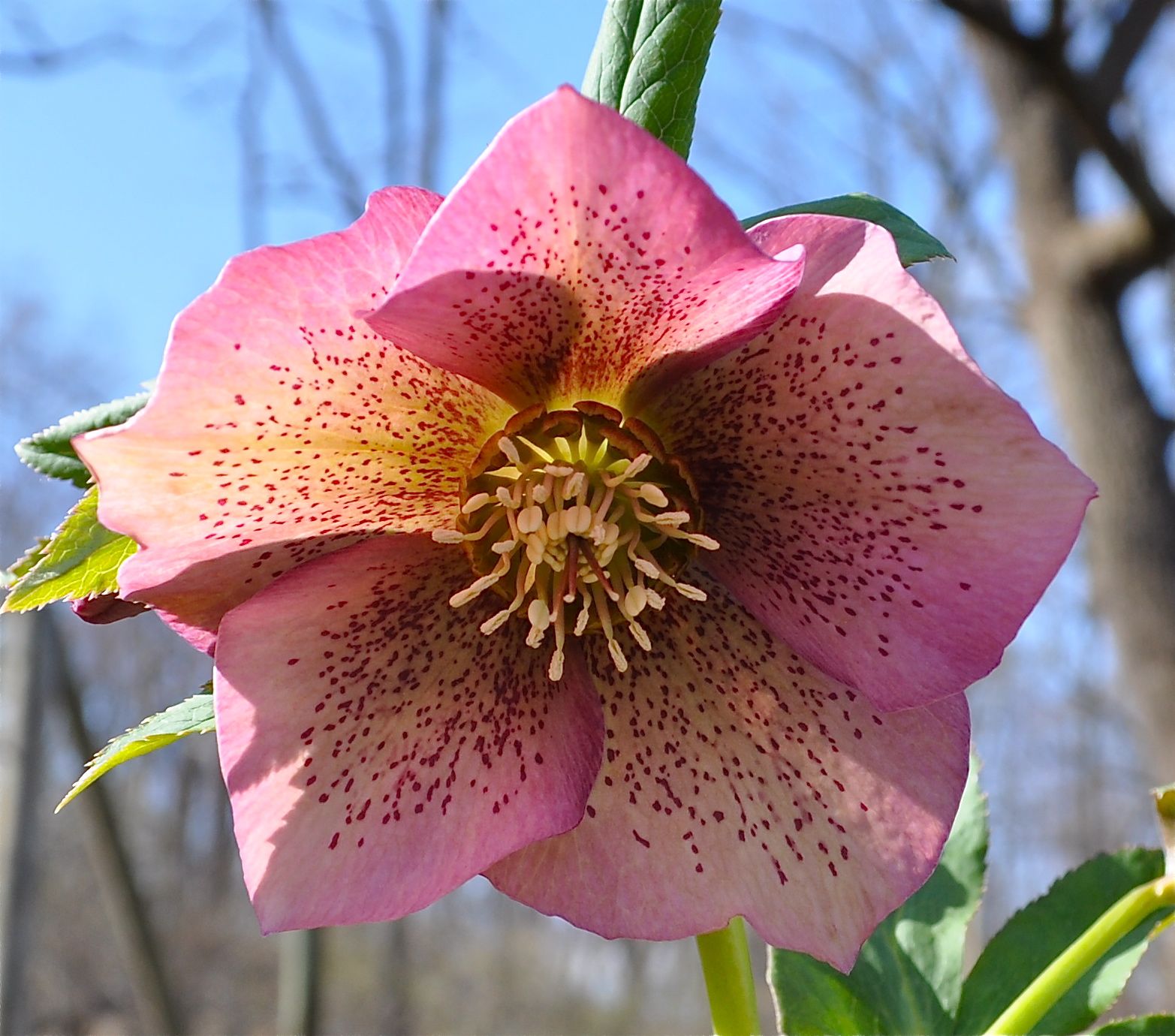
So following are some random pictures of things in bloom at the zoo, and some animals, and some thoughts I had about the movie.
When the sun broke out on Thursday after seemingly interminable rain, the entire city decided to make the zoo their destination. Traffic was snarled and drivers were honking and yelling in a raucous manner very unbecoming for the City of Brotherly Love.
Once inside though the crowd disbursed and it turned out to be a very pleasant tour. Then yesterday, Friday, I finally got around to the movie theatre to see Alice. The reviews were scalding so I didn't expect much but, since the books have always fascinated me, I had to go anyway.
Thus I was astonished to see that the movie is enchanting, the acting is droll, the dialogue and choreography a tour de force of acerbic wit. The costumes and makeup and sets are by themselves riveting. I am going to purchase a dvd and watch it more than once, because, in addition to dazzling originality, it also is brimming with so many reverential nods to earlier masterpieces like the Wizard of Oz and Narnia, and no doubt several others, that it's impossible to recognize them all in one viewing.

I loved it for the voluminous, deep references to dreams and nightmares, to the struggles of spirit and independence and freedom against repression and convention. I'm surprised that in the wake of much discussion in print and on blogs about the ecological themes in Avatar, more has not been said about the clear references to environmental degradation in Alice, when they are just as plainly articulated in the plot.

To my mind the Red Queen is an almost blatant, deliberate caricature of Sarah Palin, complete with the futility of lipstick smeared on a pig. The heedless, sneering cruelty to animals, the adolescent temper tantrums, and the delusional, self-absorbed vanity, are a perfect parody of Caribou Barbie. They both believe in that fundamentalist tenet, that their role is to exercise dominion over all other creatures.
This destructive philosophy is demonstrated with visceral power in a scene where she wields a quivering flamingo as croquet mallet, and whacks a terrorized hedgehog with unconcealed relish.
In stark contrast is her rival, the White Queen, who has pledged to never harm a living creature. The fact that they are sisters has no little import and adds another layer of complexity.
Last but not least, the apocalyptic landscapes of charred, twisted trees are at least as convincing as those of any doomer porn (the Book of Eli for example). Even the vegetation that does remain around the Red Queen's castle is stunted and discolored, looking exactly as though it had been exposed to high levels of background tropospheric ozone.
After I got home from the zoo and downloaded my pictures of the animals, they all appeared so mournful and dejected.
It reminded me of my last post, Gratitude, wherein I had been thinking that although I should feel grateful
for all the creature comforts I enjoy, I'm not! I'm angry that our habitable climate has been irretrievably squandered and we are leaving a hellish existence to our children.
These animals have plenty of food and are free from the fear of predators.
But they are trapped, unable to live in nature as they were meant to.
And so are we (those of us in the developed world) also trapped.
We are trapped by the notion that we must have ever more, bigger, newer, faster stuff.
Ah, the majestic tigers!
They are my favorite and I was thrilled to get such an excellent view of them.
They are high on the list of certain extinction in the wild, which is tragic beyond description.
It is true that some of the trees are flowering nicely.
The redbuds are barely beginning to bloom, which seems odd, they are usually among the very first.
Everything is out of sequence! The curly willow was stunning.
But for the most part, the trees at the zoo were a backdrop of hideous death. Going to Philadelphia, along the highway they are toppling like dominoes. At the zoo, it was disconcerting to see so many people basking in the unnatural warmth without any sense of alarm, wandering past dying trees oblivious to the carnage, or to the implications for our food supply.
This very large tree has no terminal growth as do the younger ones that surround it. It's dead.
The Kwansa cherries are in the advanced stages of rot. This one is weeping sap.
Every tree in the particular pattern of its species has some form of splitting, peeling bark (Bark Atrophy Lichen Decline = BALD syndrome). It can be detected in physical separation and in this two-tone coloration.
High above, holes and fatal cankers are visible.
The best of the evergreens have lost a significant number of their needles, and are turning yellow and brown.
There are several mature Thornless Honey Locust trees at the zoo.

Their bark is breaking off, and there is a vile acid green fungus spreading on them.
I have no idea what this growth on the branches of the American Sweet Gum could be.
It cannot be the bark splitting off because the growths are wider than the twigs to which they are attached.
Curiouser and Curiouser! as Alice was wont to say.
Another nasty new result of ozone poisoning is the blackening trunks, particularly of maples. It could be that they are leaking sap, and that provides a medium for fungus.
The zookeepers must be kept quite busy, picking up fallen branches.
At the exit resides this tremendous old ginko.
I am afraid that the difference in color at the base of the trunk is indicative of losing the surface of the protective layer of bark. It's got quite a hole, and a fascinating, droopy downward growth.
It is troubling that on a cloudless day, with an almost painfully bright blue sky, a murky haze mars the distance.
Many years ago friends stayed at Wit's End, for a vacation from their home in Manhattan, while we were away. They never returned. Even though they lived in an NYU highrise next to the medical center, and the howling of ambulances made uninterrupted sleep impossible, they found all the night noises out here in the country, frightening. Frightening! Lions and tigers and bears, oh my!

I myself have always welcomed the racket of crickets, and the occasional screech owl. Every now and then something screams in the night and there the sound of splashing in the creek. I still don't know who is eating what and to be truthful it is quite violent.

Anyway the point is, our friends wouldn't be afraid if they stayed here now. There are hardly any sounds coming from the woods and wetlands anymore. My friend Catarina characterized it with one word, "hollow." There is no question in my mind that the ecosystem is collapsing, and life in all its forms is diminishing. The desolate scenes in Alice are pretty close to what is going to be the fate of our forests.

Thus I was utterly incredulous when I read this report in Science Daily from researchers at the Smithsonian Institute in Maryland, stating that longer growing seasons, warmer temperatures, and rising CO2 are making the trees grow faster. Although that is likely true, it is clearly being offset by either negative aspects of faster growth (weaker structure, cracking bark, making access for insects and disease) and/or, the growth inhibiting effects of concurrent exposure to inexorably rising background levels of toxic ozone.

I wrote to the lead scientist Dr. Parker and Dr. McMahon to ask when the last measurements were taken, and what if any explanation they had for the disparity between their data and what I observe. They never answered. I basically shelved it (although I linked to it at the Basic Premise page) since it is so at odds with what I have observed, and it's just incredible to me that anyone sponsored by an organization as prestigious as the Smithsonian could possibly be corrupt (even though the research was funded in part by HSBC which is infamous as a greenwashing corporation).


THEN I read this staggering post and a followup, at climate progress, about Koch funding a Smithsonian exhibit and a not-coincidental fudging of climate science found there.

It's just plain disgusting to think that scientists could be bought off by polluting interests. Although I suppose it has certainly happened before - think of the scientists that were paid to sow doubt about the connection between tobacco and lung disease. For a colossal compendium of the connections between industry funding and professional denialism, follow the link to Crescendo Climategate Cacophony posted here.

Along the same lines is this article in Science Daily which reports on research at the Rochester Institute of Technology's Center for Integrated Manufacturing Studies, that indicates - hurray! - ethanol will reduce emissions of carbon monoxide and hydrocarbons compared to gasoline. Isn't that wonderful!!! Except...except... I reached one of the authors by phone, Brian Hilton, and asked him if they had tested for acetaldehyde, formaldehyde, or peroxyacetyl nitrates.

Nope! They didn't test for that, and neither is anybody else he could tell me. Not too many researchers have the equipment to test for those emissions, he explained, because it has to be heated and so forth...oh well, too bad, since those are the emissions that are so toxic to humans and vegetation...

Can somebody please tell me why our government is mandating the addition of ethanol to gasoline when nobody seems to be checking to see if the emissions are safe for humans and plants to breathe?

As this study and this one make clear, emissions from ethanol and biofuels are WORSE for health than those from fossil fuels.

Update: I just came across (via immoralminority) this marvelous blog post, Malice In Wonderland, that created these unbelievably uproarious photoshops - I am really looking forward to reading News Corpse every day!!


Thursday, April 1, 2010

Gratitude

Finally! After tediously dark and stormy days, the sun broke out and the skies were blue, so I hastened out into the sodden yard to take some pictures. Several varieties of flowers are out, some blooming about a month early. Clumps of daffodils have shrunk since last spring.
After much procrastination I decided to splurge and buy a new camera with a telephoto lens for the purpose of taking pictures of birds. I haven't exactly been a huge bird acolyte - as far as nature goes, trees and other plants excite me more than anything else. I love the infinite variety of foliage, flowers, and growing habits, and the immense size of ancient trees. I have always been so thrilled to see something I have planted thrive. Two of my favorite books are Tulip Mania and The Orchid Thief.
Still, one thrilling moment of my life was when I spotted a Scarlet Tanager flitting through the treetops. They were almost wiped out in the 30's, when the fashion mania was for hats with brilliant plumage attached.
One of the most amazing aspects of Wit's End has always been the riotous chorus of songs that begins in spring even before the first glimmer of dawn, so loud and persistent that when I first moved here, almost 30 years ago, it was impossible to sleep after sunrise. Evenings were full of the soft cooing of the mourning dove, who used to roost under the bridge over the Cold Brook. Flocks of them would whoosh out whenever I walked over it. We could hear the hooting of an owl, who followed the track of the moon from one side of the house to the other as the night wore on, and I will never forget the incomparable delight of a nightingale's song in London.

Once, when driving home with children from school, I screeched to an abrupt halt in front of an injured loon, flapping frantically on the road. It had a viciously sharp, pointed beak, that it was thrusting with powerful strength - but luckily, a couple of guys in a pickup stopped to help. They wrapped it into a blanket I had and threw it into the trunk of my car, so we could bring it to a local rescue hospital. All the way there, it cried in the sweetly heartbreaking lament they are famous for. The people at the Raptor Trust told me loons often crash into roads at great velocity, thinking that asphalt is water. They can dive very deep, and spear fish with that stabbing beak.
So anyway, I did get the lens but I am coming to the reluctant conclusion that it is going to be a pathetic waste of money.
That's because there aren't any birds anymore, to speak of. A few here and there but, to all intents and purposes, the bird populations have been decimated. For decades the decline of birds has been recorded, but this past winter, when trees and shrubs had not produced enough berries, seeds and nuts, has heralded the end.
Whatever were we thinking when we began using engines measured in horsepower without expecting any consequences? Now hardly anybody knows to how breed, train, or ride a horse, let alone persuade it to pull a plow. Yet we heedlessly hop into vehicles with the power equivalent to hundreds of them!
While I was wandering outside waiting for a bird, any bird, to show up, I realized I have been approaching this whole extinction of humanity topic, which will likely result from our own activities destroying biodiversity and rendering our planet uninhabitable, from the wrong direction.
I reflected on how fortunate we are to have lived in this uniquely privileged period of time - soon to end - of life on earth when we have been able to savor every food, art, music, scenery, literature, pleasure, medical and dental care - at the pinnacle of civilization? How long has humanity had the ability to banish the dark at the flick of a switch...and fly through the air?

Probably only the Indians who had peaceful cultures (were there any?) and coexisted with nature in all its glory had it better. Compared to other civilizations of eons past - centuries of slavery, starvation, and epidemics - those of us living now should be nothing but grateful.

That's what I decided I should feel, but the annoying thing is, I don't. I am instead enraged, because I don't think we had to do this. We were told 30 years ago about global warming, and practically nobody took it seriously, because nobody wanted to sacrifice. Jimmy Carter told us we should get off foreign oil, turn down the thermostat and put on a sweater, and he was ridiculed for it.
I planted these moisture-loving Petasites japonicus hoping they would spread. That was all well and good located further out, but I made the mistake of putting some in a boggy spring right next to a vegetable garden where they have become a serious annoyance.
This tiny flower is a spring beauty. In late April and May they carpet the forest floor with their delicate pink - it shouldn't have bloomed in March.

What does is mean that everything is blooming so early? It is so strange that I am beginning to think it can't be explained simply because of warmer temperatures. I am starting to wonder if, in hindsight, this phenomena won't go into the same category as over-production of flowers, seeds, and cones. If the plants and trees "know" enough to throw all their energy into reproduction when they "sense" they are dying, then perhaps they are capable of flowering early, to get a jump on things, if they know they are going to be leafless by the end of the summer.

And it's going to be a very hot summer. It won't surprise me if ultimately warmer temperatures lead to THIS, a giant melt of ice, a megaflood, leading to a change in the North Atlantic current. OUCH.

Another thing (it's so hard keeping up with TEOTWAWKI). It's very interesting to see that scientists are FINALLY starting to make crucial links. I do understand that science must be rigorous, but some things are so obvious that it's like blaming an earthquake on plate tectonics, duh, and yet scientists are loathe to make connections between forest decline and ozone, or extreme weather events and climate change. See this discussion of the flooding of New England at climateprogress.org for a perfect example of the agonizing.

For more examples, there is just out a study linking breast cancer to exposure to petroleum products (expect many more cancers to be ultimately linked to pollution), and the dieoff of bees to pesticides. Double duh.
Another intriguing question is, how relevant is this finding, as posited in my comment at CP:

  1. Maybe between the deluge in the Northeast and this article floating around in various guises, people will start paying more attention:

    http://uk.reuters.com/article/idUKTRE62E2KJ20100315

    Since the economic slowdown was supposed to be reflected in a lowering not increasing level of emissions maybe this is indicative of sinks no longer functional – oceans being saturated and/or forests emitting not absorbing…

Tuesday, March 30, 2010

A Beautiful Day in the Neighborhood!


For those who retain an ability to read, here is a fascinating article about one scientist's journey to understand the ramifications of ocean acidification. It's really sad, and scary - the staggering loss of oysters in the Pacific Northwest.

Now, for bittersweet nostalgia!

Rain Rain Rain

No pictures! I cannot take my camera out into the deluge. Instead, some thoughts:

Catman's correspondent (see comments on last post) has led me to ponder anew the predilection of professional foresters and other scientists to blame tree decline on insects, fungus, disease, invasive species, drought, and excessive rain...anything but toxic greenhouse gasses...and certainly lichens are benign, and grow at a steady, predictable rate!

A scientist at FACE likened insects and disease to sharks that smell blood in the water, when trees are weakened by exposure to ozone. That's a nicely graphic and violent description, but it's actually more subtle than that.

It's more akin to a dying organism being attacked by other species that lurk around, not merely to consume the host, but for the purpose of breaking it down into nutrients as part of the overall functioning of the ecosystem. Thus if you were lying in a desert, dying of thirst, the ants would find you. If you collapsed on a roadway in New Jersey, the turkey buzzards would soon be pecking at your flesh. If you were buried, the worms would transform you into soil. Everywhere, there are flies and maggots. And lichens break down wood (according to the Science Museum in Boston.)

That is what is happening to trees. They are being colonized by insects, lichens, bacteria, and fungi because they are already dying from pollutants - and these vulture species are simply doing their vampire job, devouring the carrion.

Normally that would only happen to a small segment of the population - now however, it is happening to every individual.

Stripping

Blog Archive

My Blog List

Search This Blog

Followers

counter